Here’s what to do when the power goes out, in order: check if it’s just your house (look at the breaker panel and your neighbors’ lights), report the outage to your utility, keep the fridge and freezer closed, and never, ever, run a generator or grill indoors or in the garage. Food in a closed fridge is safe for about 4 hours; a full closed freezer holds for about 48. If someone in the house depends on powered medical equipment, that’s your first phone call, not your last.
That’s the two-minute version, and if your lights are out right now, it’ll carry you.
The rest of this guide is everything I wish I’d known before February 2021, when Winter Storm Uri took our Texas neighborhood down for six days and I learned (professionally humiliated, personally freezing) that twenty years of managing building emergency systems hadn’t made my own house ready for a Tuesday without the grid.
In this guide
- First five minutes: is it you or the grid?
- Food: what survives and what you toss
- Staying warm (or cool) without power
- The generator section: read this before you buy or start one
- Phones, light, and medical devices
- Before the next one: the outage kit that fits on one shelf
- After the power comes back
- FAQ
First five minutes: is it you or the grid?
Half the battle is knowing which problem you have.
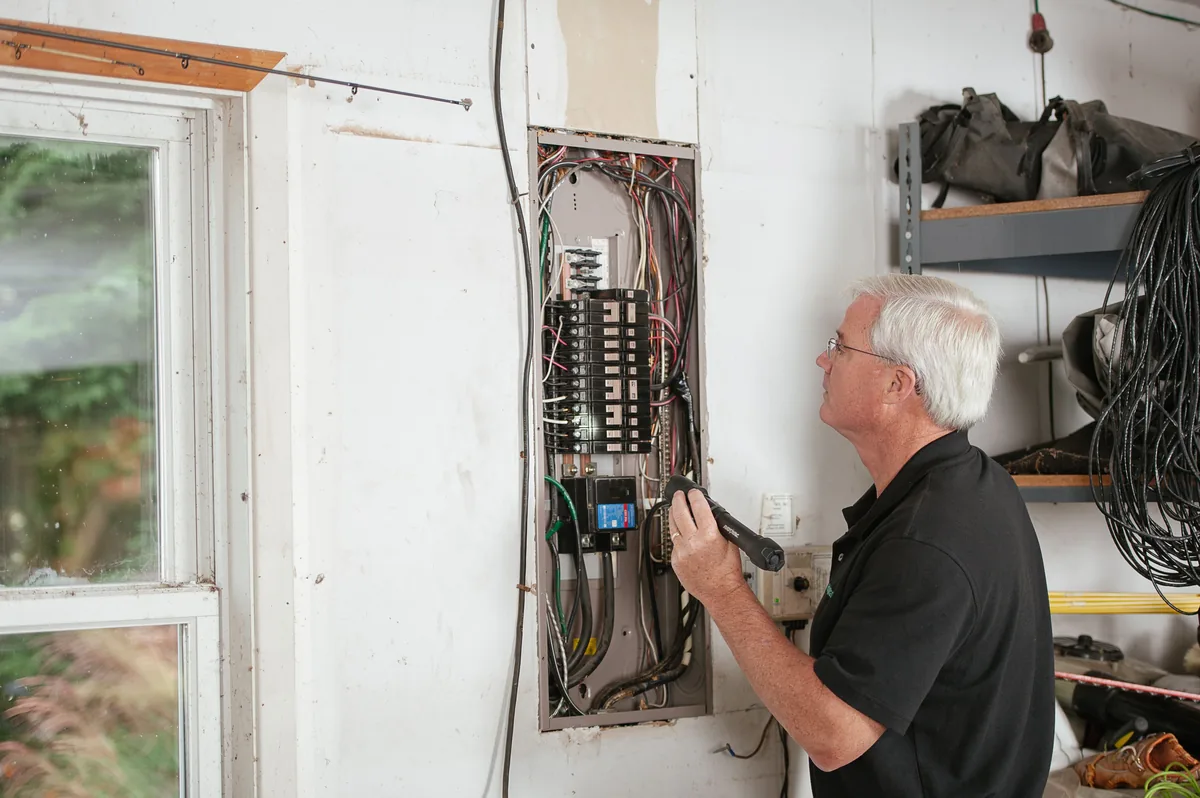
Check your breaker panel first. One tripped breaker means it’s your house: flip it fully off, then on. Whole panel fine but the house is dark? Look outside. If the neighbors and the streetlights are out too, it’s the grid, and your job changes from “fix it” to “manage it.”
Report it anyway. Utilities map outages partly from customer reports: don’t assume someone else called. Save your utility’s outage number and website in your phone now, while things work. Mine’s on a card taped inside the pantry door, because in 2021 I discovered that a phone at 12% battery is a terrible place to start googling “Oncor outage map.”
One more thing in those first five minutes: turn off or unplug the big stuff: the AC, the space heaters, anything with a motor or heating element that was running. When power is restored to a whole neighborhood at once, the surge of everything restarting simultaneously can knock it right back down. Leave one light switched on so you’ll know the moment it’s back.
How long will the power be out? (Reading the situation)
Nobody can promise you a number, but you can read the signs like a facilities guy.
A blown transformer on your block (the loud pop, the localized outage) is usually hours. A storm that took down lines across the county is usually one to three days. And a regional event, where the grid itself is struggling? That’s when you plan for longer than the official estimates. During Uri, restoration estimates moved every few hours; some Austin high-rises averaged 11 days. Hurricane recoveries have run two weeks and beyond, which is the one case where you usually get days of warning instead of minutes: how to spend them is in the hurricane readiness playbook. Modern supply chains don’t leave slack either. Grocery stores typically carry only a day or three of inventory, which is why shelves emptied around us by day two.
My planning rule since 2021, and this site’s rule: be ready for 14 days, be relieved when it’s 4 hours. The 72-hour advice you see everywhere is a starting point, not a finish line.
Food: what survives and what you toss
The numbers that matter, straight from USDA guidance and verified in my own kitchen with a $12 appliance thermometer:
A closed refrigerator keeps food safe for about 4 hours. A full closed freezer holds about 48 hours: half-full, about 24. The word doing the work in both sentences is closed. Every peek costs you cold. During Uri I put a strip of painter’s tape across the fridge door as a physical “are you sure?” for two teenagers. It worked better than lecturing.
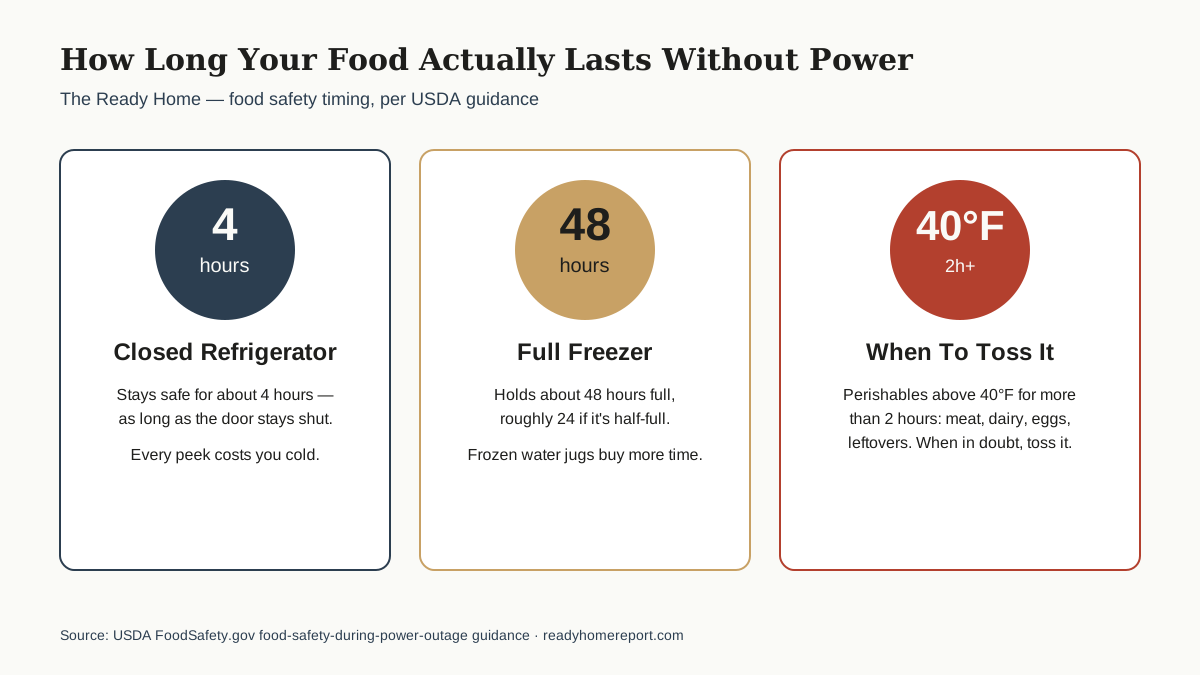
After that window, the rule is the thermometer, not your nose: perishables that spent more than 2 hours above 40°F get tossed. Meat, dairy, eggs, leftovers, cooked pasta: gone. It hurts to throw food away in the middle of an emergency, which is exactly why people talk themselves into keeping it, and food poisoning during an outage is a special kind of bad decision. “When in doubt, throw it out” survives every one of my incident reports.
Full breakdown, food by food, in How Long Food Lasts Without Power, including the freezer tricks that legitimately buy you time.
Staying warm (or cool) without power
Cold-weather outage: shrink the house. Pick one room (ideally small, south-facing, upstairs beats downstairs for warmth) and move everyone into it. Close every other door. Blankets over windows, towel at the door gap. Our living room hit 41°F on day two of Uri; the one bedroom we sealed and shared held around 55°F. Layer clothes, wear the hat indoors, and put the whole family in one room at night. The teenagers survived the indignity.
Do NOT bring the grill, the camp stove, or any propane heater not rated for indoor use inside for heat. I’ll say it plainly: people die this way every single winter storm, and it’s carbon monoxide. You can’t see it or smell it. If you use an indoor-rated propane heater, it needs the label saying indoor-safe, a cracked window, and a working CO detector.
Full room-by-room strategy in How to Stay Warm During a Winter Power Outage.
Heat-wave outage: reverse the logic. Lowest floor, shades drawn on the sun side, wet washcloths on wrists and neck, and know where your town’s cooling centers are before you need them. Heat kills more Americans than any other weather event. An outage during a heat dome is a genuine emergency for elderly neighbors especially. Check on them. That’s not a platitude; it’s the single highest-value action on this page. Full breakdown (heat exhaustion vs. heat stroke, and who’s actually at highest risk) in How to Stay Cool During a Power Outage Heat Wave.
The generator section: read this before you buy or start one
Safety Note: this is the part of the guide that keeps people alive
Portable generators run outside only: at least 20 feet from the house, exhaust pointed away from windows and doors. Never in the garage. Not even with the door open. Never on the porch. Never in the house, obviously, and yet every major outage, carbon monoxide from generators kills Americans in exactly these ways. Pair any generator with battery CO detectors in the house. This guidance is CDC/CPSC standard, and nothing you read anywhere (including here) overrides it.
Full breakdown (the physics of why, what CO poisoning actually feels like, and the 2025 update on standby generators) in Generator Safety and Carbon Monoxide.
Now, the buying question everyone actually has: generator or battery power station?
My short answer after testing both through real outages: for most suburban families starting out, a battery power station wins. No fumes (safe indoors: that alone changes everything), no fuel storage, no maintenance, silent, and the mid-size units run a full-size fridge for a day or more. I measured 31 hours of fridge runtime on the 2-kWh unit in my garage. The box claimed 36, and that gap is exactly why I test with a notebook. Add a folding solar panel and you can limp along indefinitely on sun.
Gas generators still win on raw watts per dollar: whole-house loads, well pumps, long multi-week recoveries. They also demand fuel you must store safely and rotate, oil changes, monthly test runs, and the 20-feet-from-the-house discipline above. A generator you haven’t started in two years is a heavy paperweight; gear you don’t test is gear you don’t have.
Phones, light, and medical devices
Medical equipment first. If anyone in your home depends on powered medical devices (oxygen, CPAP with a health requirement, refrigerated medication), that’s planned before outage day: register with your utility’s medical baseline program (most have one, and it can prioritize your restoration), have a dedicated battery solution sized for the device, and know the nearest facility with power. Refrigerated meds follow the same 4-hour fridge math above; your pharmacist can tell you the specific tolerance of yours today, free. Full breakdown of priority order, phone habits, and light is in Phones, Light, and Medical Devices During a Power Outage.
Phones: drop to low-power mode immediately, brightness down, one designated family member posts updates so four phones aren’t burning battery on the same doomscroll. Texts beat calls on a strained network. A $25 power bank per family member is the single best dollars-to-usefulness ratio in this entire hobby.
Light: headlamps beat flashlights (your hands are busy during a crisis. Ask me about cutting ceiling drywall at 2 a.m.), and modern LED lanterns run for days on a charge. Candles are the romantic way to add “house fire” to your outage. I keep one headlamp per person plus two lanterns, about $70 total, and it’s the purchase Karen went from mocking to defending.
Before the next one: the outage kit that fits on one shelf
You don’t need a bunker. Our entire outage setup lives on one garage shelf and change, and the starter version is under $100:
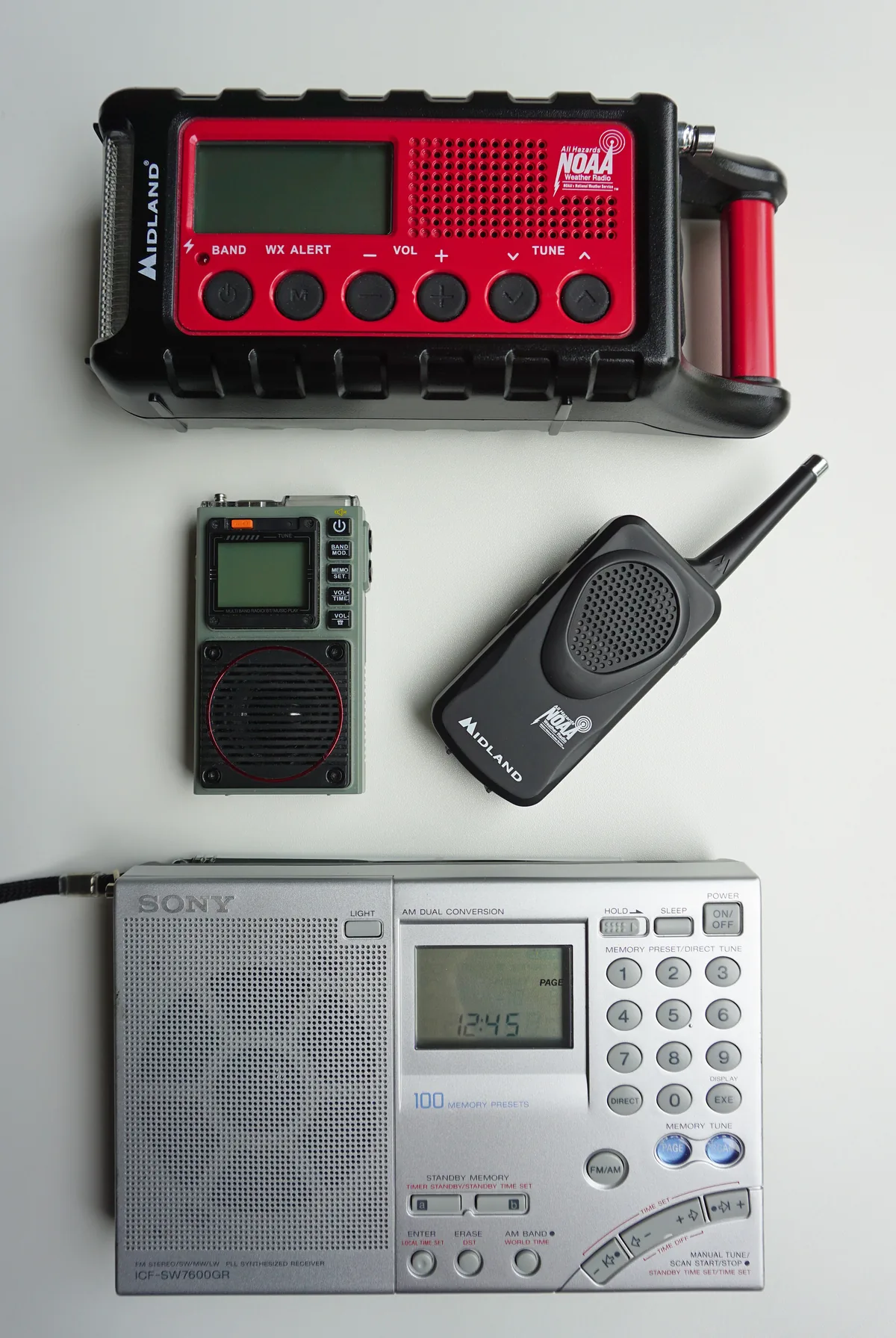
Water (1 gallon per person per day: start with 3 days, build toward 14), shelf-stable food your family genuinely eats, headlamps and lanterns with spare batteries stored separately (batteries left in devices are how I ended up robbing an Xbox controller), power banks charged on a monthly calendar reminder, a battery or hand-crank NOAA weather radio, a real first-aid kit, the appliance thermometer, painter’s tape, and a printed sheet with your utility’s number, because the outage map is useless at 0%.
And then the step nobody does: test it. Twice a year we kill the main breaker for an evening and run the house on the plan. I call it the Tuesday Drill, the kids call it child abuse, and every single time it finds something: the dead lantern, the missing can opener, the power bank someone “borrowed.” Better to find it on a fake Tuesday than a real one.
After the power comes back
Don’t just flip everything on and move on. Walk the house: reset clocks and the water heater if needed, restart the big appliances one at a time over a few minutes (kinder to your house and the still-fragile grid), run the thermometer check on the fridge and freezer before anyone eats from them, and restock whatever the outage consumed: tonight, not “eventually,” because the follow-up storm is a classic move.
Then do the thing that turned my worst week into this website: a five-minute incident report. What ran out? What failed? What did you improvise? Write it on the checklist. That list is your shopping list, and next Tuesday you’ll be the neighbor everyone thought I was.
FAQ
What should I do first when the power goes out?
Check your breaker panel to rule out a tripped breaker, look at neighbors’ lights to confirm it’s an outage, report it to your utility, and keep the fridge and freezer closed. If anyone depends on powered medical equipment, address that immediately.
How long does food last in the fridge without power?
About 4 hours in an unopened refrigerator. A full freezer keeps food safe about 48 hours (24 if half-full), per USDA guidance. Perishables above 40°F for more than 2 hours should be discarded.
Is it safe to run a generator in the garage with the door open?
No. Carbon monoxide builds up even with the door open. Portable generators belong outside, at least 20 feet from the house, exhaust facing away from windows and doors, with working CO detectors inside the home.
How do I keep my phone charged during an outage?
Switch to low-power mode immediately, lower brightness, prefer texts over calls, and use pre-charged power banks. A small solar charger or a battery power station extends you from days to indefinitely.
Should I buy a generator or a power station?
For most families starting out, a battery power station: safe indoors, silent, no fuel or maintenance, and mid-size units can run a refrigerator for roughly a day per charge. Gas generators make sense for whole-house loads and very long outages if you’ll commit to fuel storage and maintenance.
How much water should I have for a power outage?
Outages often affect water systems too (pumps, treatment, boil-water advisories), so store 1 gallon per person per day: 3 days minimum, 14 days as the goal, per standard FEMA/Ready.gov guidance.
This article is for general preparedness education and follows official guidance (FEMA, CDC, CPSC, NWS, USDA) on safety points. In any emergency, instructions from local officials always come first.