
Never run a portable generator in the garage, on the porch, or anywhere inside. Not even with the door open. Keep it at least 20 feet from the house, exhaust pointed away from windows and doors, and pair it with battery-powered carbon monoxide detectors inside. That’s the whole rule. Everything below is why it’s non-negotiable and what it actually looks like in practice.
I’ve managed emergency generator systems professionally for 20 years, and I still triple-check this one every single time, because carbon monoxide doesn’t care how many years of experience you have. It’s odorless, colorless, and it kills people who “just ran it in the garage for a few minutes.”
In this guide
The rule, in one sentence
Outside only, 20 feet minimum from any door, window, or vent, exhaust facing away from the house. That distance isn’t a suggestion. It’s the CPSC’s own tested guidance for how far carbon monoxide has to travel before it stops being lethal-concentration at your windows.
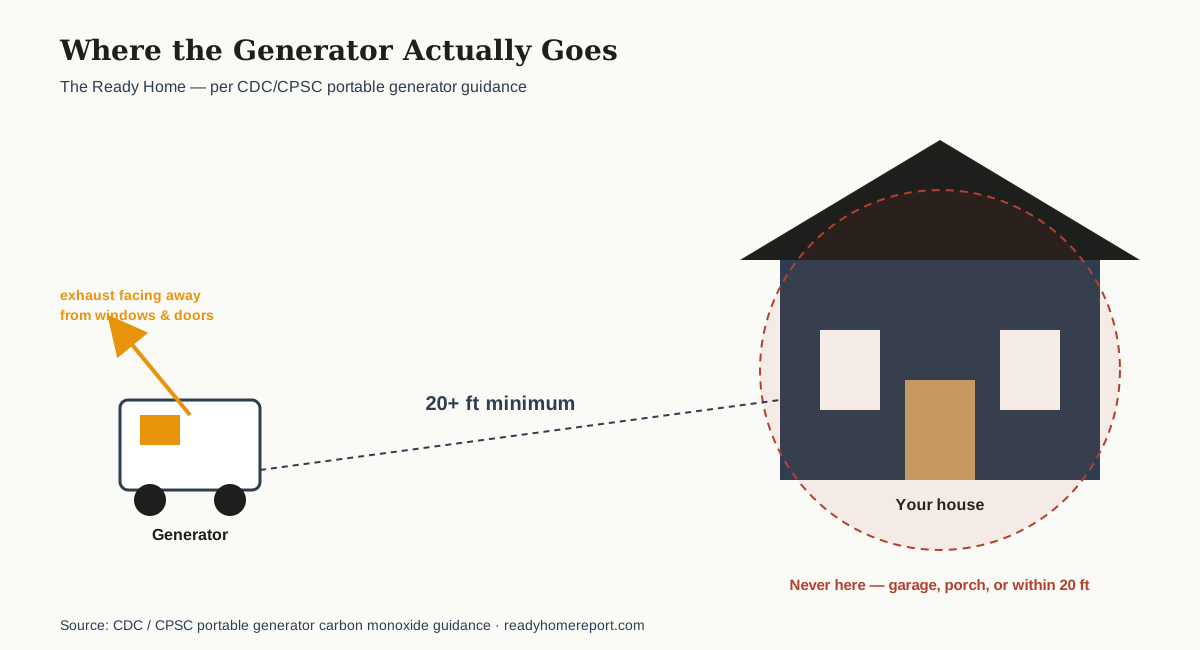
Why 20 feet, and why the garage is never an option
A running generator produces roughly the same carbon monoxide output as running several cars at once, in a space with none of a car’s exhaust system. In an enclosed or semi-enclosed space (a garage, even with the door up, a porch, a tent) CO concentrations can reach dangerous levels within minutes. It doesn’t need four walls to build up dangerously; a garage with the door open still traps enough for the gas to seep into the house through every gap, vent, and doorway.
Safety Note: this is the article that keeps people alive
Portable generators run outside only: at least 20 feet from the house, exhaust pointed away from windows and doors. Never in the garage. Not even with the door open. Never on the porch. Pair any generator with battery-powered CO detectors inside the house. This is CDC/CPSC standard, and nothing overrides it, including anything that sounds convenient at 2 a.m. in the rain.
I’ve heard every version of the workaround: pointing a fan at it, running it “just for a minute” to charge something, cracking one window. None of it changes the physics. The only version of this that’s actually safe is outside, at distance, exhaust facing away.
What CO poisoning actually feels like
The dangerous part of carbon monoxide is that the early symptoms feel like nothing serious, which is exactly why people don’t act on them in time.
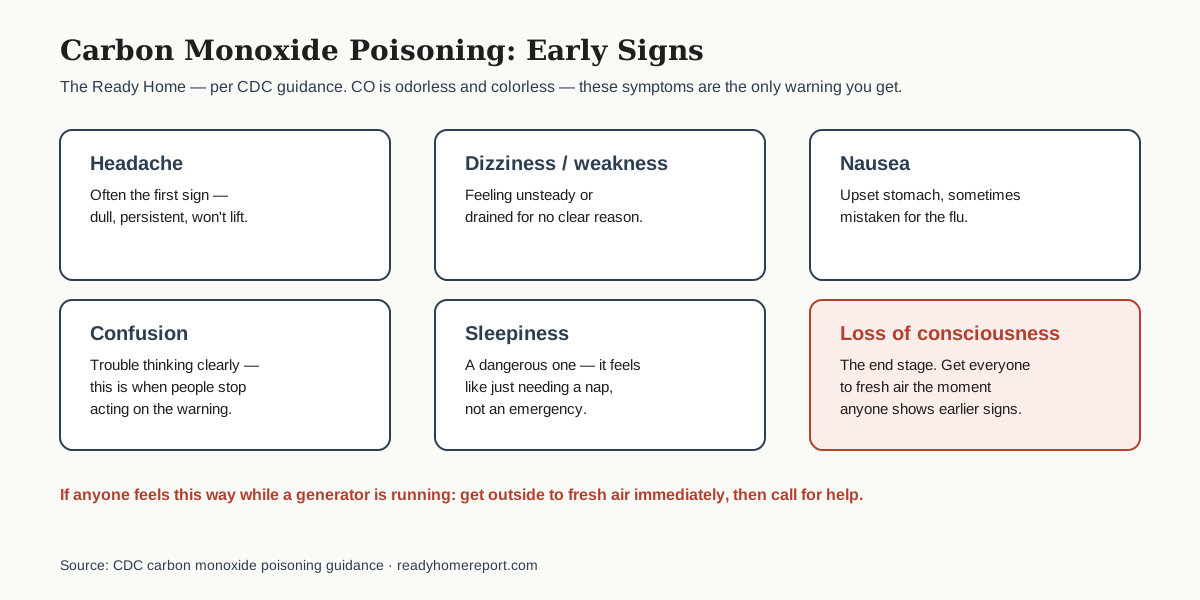
If anyone loses consciousness, has a seizure, or is severely confused while a generator is running anywhere nearby, call 911 immediately. Get them to fresh air, but don’t wait to see if it helps before calling. Confusion and loss of consciousness are symptoms of the poisoning itself, so the person may not be able to judge their own condition. For milder symptoms (headache, mild dizziness, nausea), get everyone to fresh air right away, shut down the generator once it’s safe to approach, and seek medical care if those symptoms don’t clear within a few minutes outside.
The one update: standby generators are different
If you’re looking at a whole-house standby generator instead of a portable one, there’s a newer piece of guidance worth knowing. In June 2025, following a federal report on carbon monoxide incidents in Louisiana after Hurricane Ida, the government recommended standby generators be installed at least 25 feet from a home, a jump from the older 5-foot industry standard. That’s a different product category from the portable generators most families start with, and it’s a decision for whoever installs the unit, but it’s worth asking about if a standby system is on your list.
Fuel storage, without turning the garage into a hazard
Store gasoline in approved, labeled containers only, away from any ignition source, and rotate it. Gas degrades within a few months and can gum up a generator’s carburetor right when you need it most. I keep ours in the shed, not the garage, for the same reason the generator itself never runs there: fuel and living space don’t mix. A fuel stabilizer added at fill-up buys another few months of shelf life if you’re not rotating on a strict schedule.
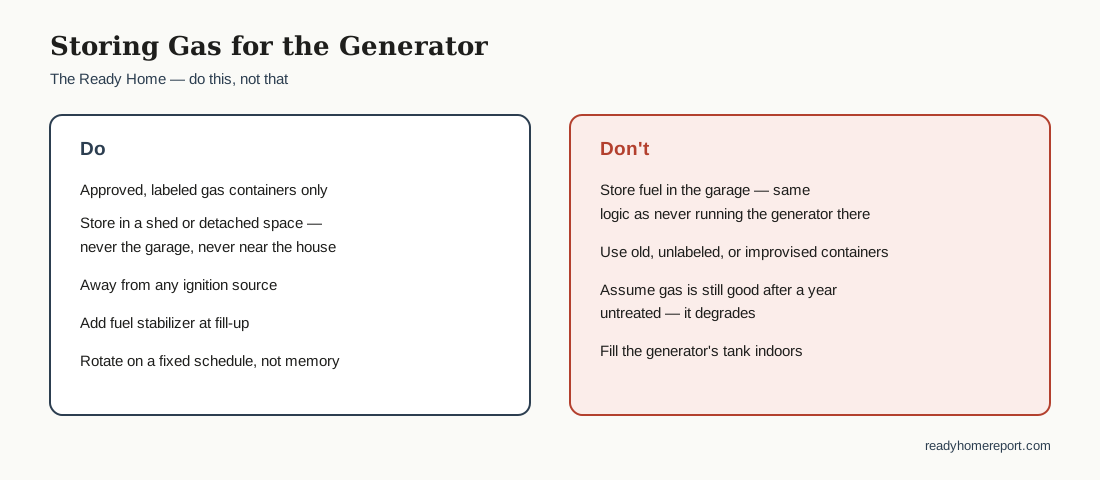
If you’re weighing heat sources for the same outage, see How to Stay Warm During a Winter Power Outage. Same CO logic applies to indoor heating equipment.
FAQ
Is it safe to run a generator in the garage with the door open?
No. Carbon monoxide builds up even with the door open, and it seeps into the house through any gap. Generators belong outside, at least 20 feet from the house.
How far should a generator be from the house?
At least 20 feet for a portable generator, with the exhaust facing away from windows, doors, and vents. Standby (whole-house) generators have a separate, newer 25-foot recommendation from federal regulators as of 2025.
What are the first signs of carbon monoxide poisoning?
Headache, dizziness, weakness, and nausea are usually first, followed by confusion and sleepiness. Left unaddressed, it progresses to loss of consciousness. Get to fresh air at the first sign.
Can a carbon monoxide detector replace safe generator placement?
No. A CO detector is a backup alarm, not a substitute for keeping the generator outside and at distance. Use both.
How long can gasoline be stored for a generator?
A few months without treatment; a fuel stabilizer can extend that. Rotate stored fuel on a schedule rather than assuming it’s still good when you need it.
Full outage plan and the generator-vs-power-station buying question are covered in the Power Outage Guide.
This article is for general preparedness education and follows official guidance (FEMA, CDC, CPSC, NWS, USDA) on safety points. In any emergency, instructions from local officials always come first.