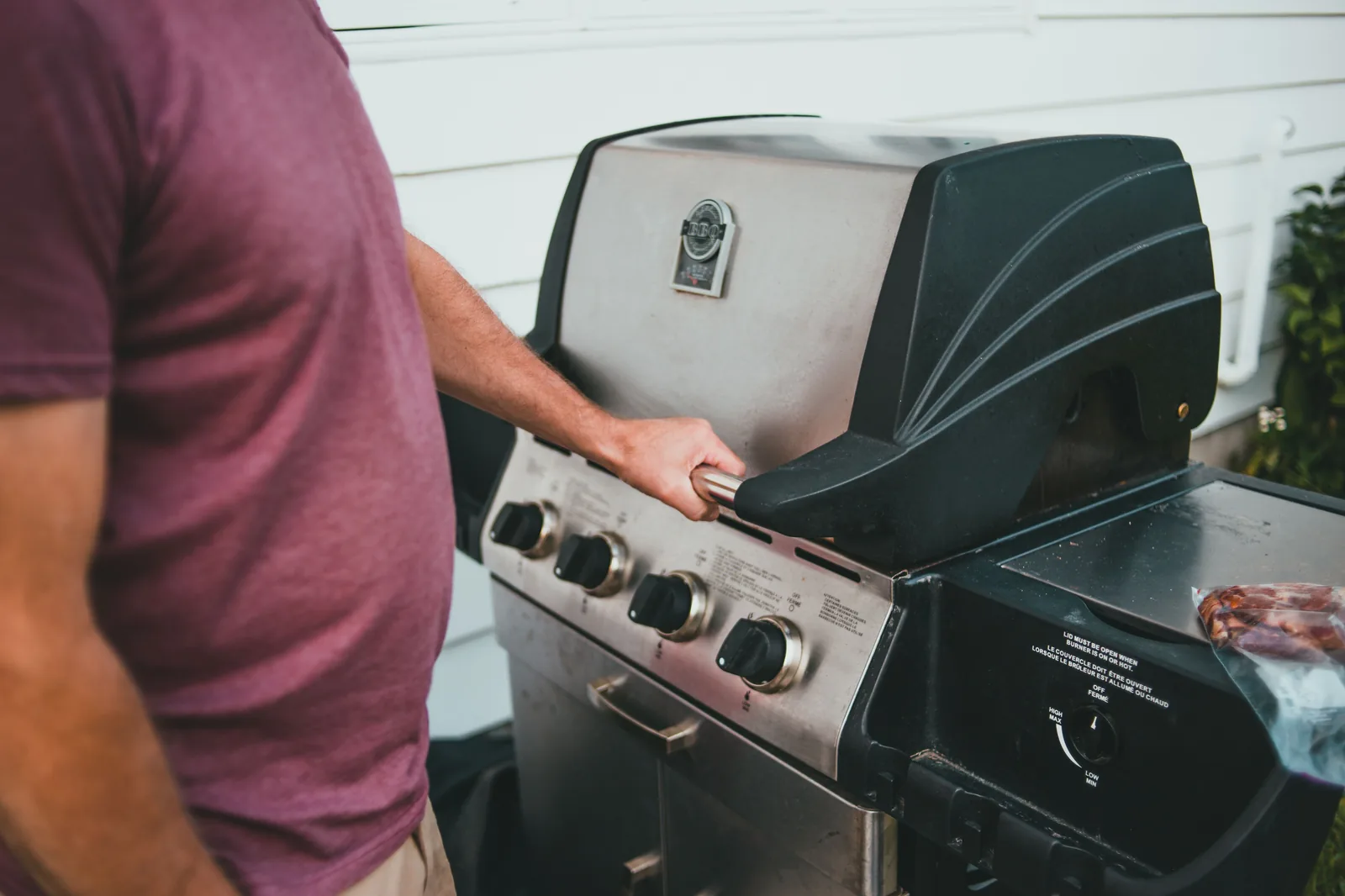
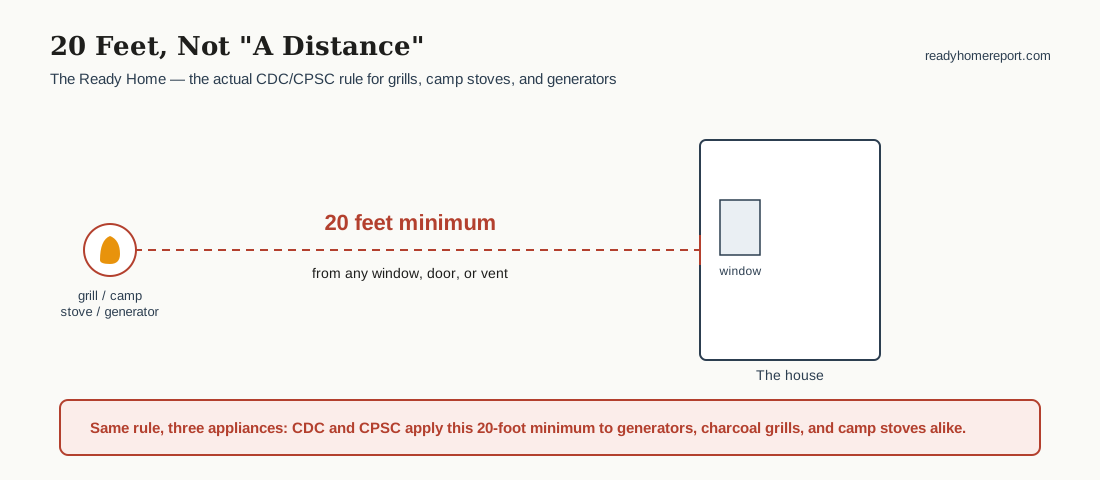
Cook outdoors on a gas or charcoal grill, or a propane camp stove: always outside, at least 20 feet from any window, door, or vent, for exactly the same carbon monoxide reason as a generator. Indoors, a gas stove that lights with a match still works without electricity (most do: check yours before you need to know), and a fireplace or wood stove can handle a Dutch oven or cast iron skillet. If neither is available, plan meals around what needs no cooking at all: canned food, peanut butter, crackers, fruit. That’s how to cook without power safely. The rest of this guide is the reasoning and the edge cases.
This one trips people up because the instinct during bad weather is to bring everything inside where it’s warm and dry. For a cooking flame, that instinct is exactly backwards.
During Winter Storm Uri, our power was out for six days and the house was down to 41°F by day two. The gas stove (lit with a match, no electricity needed) was the one thing in the kitchen that still worked. We used it to melt snow for the toilet the night a pipe burst.
In this guide
Outdoor methods: the safe defaults
A gas or charcoal grill handles most of what you’d cook indoors: meat, vegetables, even a pot of something on the side burner if your grill has one. A portable propane camp stove is more flexible for actual cooking (simmering, boiling water) and cheap to keep on hand. Both run outside only, at a real distance from the house. A generator produces carbon monoxide faster and in far greater volume than a grill or camp stove, but the underlying gas is exactly as dangerous, which is why CDC and CPSC apply the same distance rule to all three.
Safety Note: the same rule as the generator, for the same reason
Charcoal grills, gas grills, and camp stoves run outside only, at least 20 feet from any window, door, or vent, never in a garage, on a covered porch, or anywhere indoors, even with a window cracked. This is CPSC and CDC guidance, and it’s exactly how people are poisoned during outages: cooking indoors specifically to stay warm or out of the weather. If anyone in the house gets a headache, feels dizzy, or nauseous with no other explanation during or after using any of this, get everyone outside into fresh air and call 911. Those are the early signs of CO poisoning, and they’re easy to mistake for just being tired or cold. A battery-powered CO detector is worth having regardless. It won’t stop you from making a mistake, but it’ll tell you before it becomes dangerous. Cook outside, then bring the food in to eat.
What actually works indoors
Check your stove before you need this answer: a gas range with a standing pilot or a match-lit burner still works without electricity, but many modern gas ranges use an electric igniter that won’t function without power, even though the gas itself is still flowing: know which one you have. A wood-burning fireplace or stove, if you have one and it’s up to code, handles a Dutch oven, cast iron skillet, or a pot set on a metal grate over the coals. Just confirm the damper or flue is fully open before you light anything, since a closed flue traps the same carbon monoxide indoors that the 20-foot rule keeps outside. These are the two indoor options that don’t carry the carbon monoxide risk of outdoor equipment brought inside.
When there’s no cooking method at all
Plan part of the 14-day pantry specifically around food that needs zero heat: canned goods that taste fine cold (chili, soup, ravioli: not gourmet, but functional), peanut butter and crackers, dried fruit, granola bars, canned fruit. This is exactly the “no-cook options” category from the pantry guide. See the freeze-dried vs. canned vs. MRE comparison if you want a cold, zero-prep option beyond the pantry basics, and it earns its place precisely for days like this: a genuinely bad-weather day when even outdoor cooking isn’t safe or practical.
FAQ
Is it safe to use a camp stove indoors during a power outage?
No. Camp stoves, like grills and generators, produce carbon monoxide and must be used outdoors only, at least 20 feet from any window, door, or vent. Never in a garage or on a covered porch.
Will my gas stove work during a power outage?
It depends on the ignition type. A gas range with a standing pilot or match-lit burner works without power; one with an electric igniter typically won’t, even though gas is still flowing. Check yours in advance.
Can I cook on a fireplace during a power outage?
Yes, if it’s a wood-burning fireplace or stove up to code and the damper or flue is fully open. A Dutch oven, cast iron skillet, or a pot on a metal grate over the coals all work.
What should I eat if I have no way to cook during an outage?
Canned food that’s fine cold, peanut butter and crackers, dried fruit, granola bars. Build a no-cook category into your pantry specifically for this scenario.
Why can’t I use a charcoal grill in my garage during a storm?
Charcoal produces large amounts of carbon monoxide, an odorless gas that builds to dangerous levels in enclosed or semi-enclosed spaces even with the garage door open. It must be used fully outdoors, at least 20 feet from the house.
Full pantry-building guide is in The 14-Day Pantry.
This article is for general preparedness education and follows official guidance (FEMA, CDC, CPSC, NWS, USDA) on safety points. In any emergency, instructions from local officials always come first.