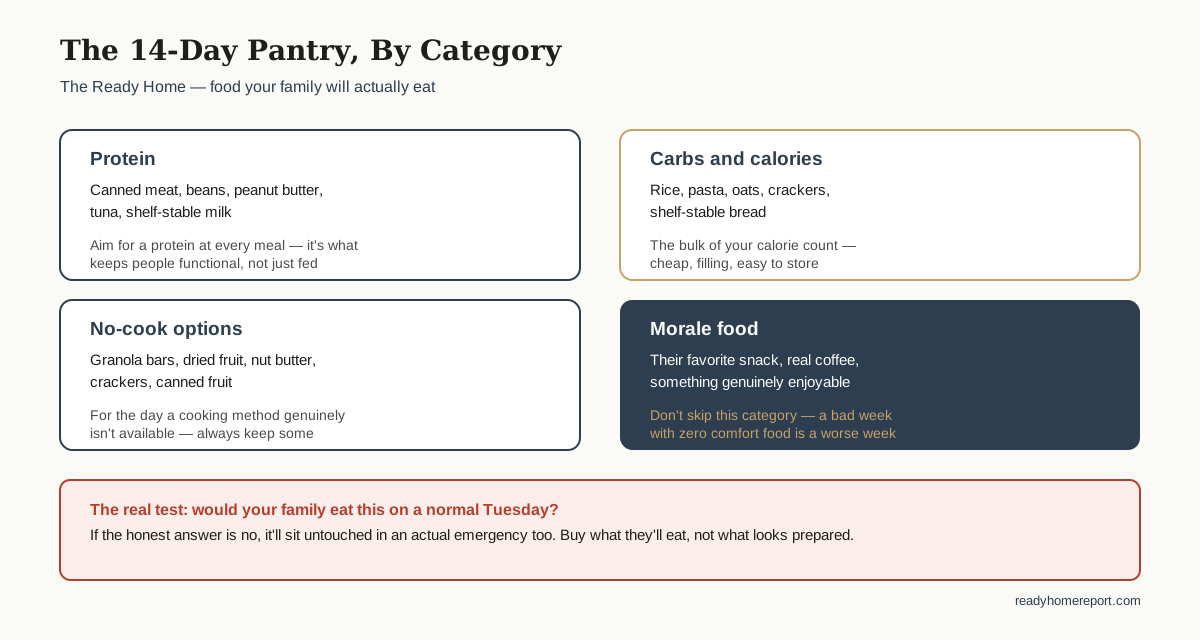
Build your 14-day pantry across four categories (protein, carbs and calories, no-cook options, and morale food) using things your family already eats, bought a little extra at a time. Skip the specialty survival-food aisle unless you want to; canned beans, peanut butter, rice, and pasta from a normal grocery run do the job. The test for every item: would your family eat this on a regular Tuesday? If not, it’ll sit untouched during an actual emergency too.
I used to think emergency food meant a case of something labeled “survival” in the name. What we actually eat during an outage is what’s already in the pantry, just more of it: canned chili, peanut butter, the pasta the kids don’t complain about.
During Winter Storm Uri, our power was out for six days, and the grocery store three miles from us had bare shelves and a line around the building before day two. If you’re building your pantry after the outage starts, you’re already too late.
In this guide
Four categories, not just calories
Calorie counting misses what actually matters day to day: whether anyone will eat the food, and whether a bad week gets a little easier because of it. The four categories: protein (canned meat, beans, peanut butter), carbs and calories (rice, pasta, crackers), no-cook options (granola bars, dried fruit. See the full breakdown in how to cook without power for what to do if heating anything isn’t an option), and morale food: whatever your family actually enjoys, because a bad week feels a little more survivable with something that tastes good in it.
The Tuesday test
Before anything goes on the shelf, ask the honest question: would your family eat this on a normal Tuesday night? Emergency-specific products (the freeze-dried buckets, the MREs) have their place (full comparison in Freeze-Dried vs. Canned vs. MRE), but the backbone of a 14-day pantry for most families is just more of what’s already in rotation. Buy two extra cans of the chili your kids actually eat instead of one can of something exotic that photographs well for a prepper blog and sits in the pantry for three years untouched.
Building it without a big grocery trip
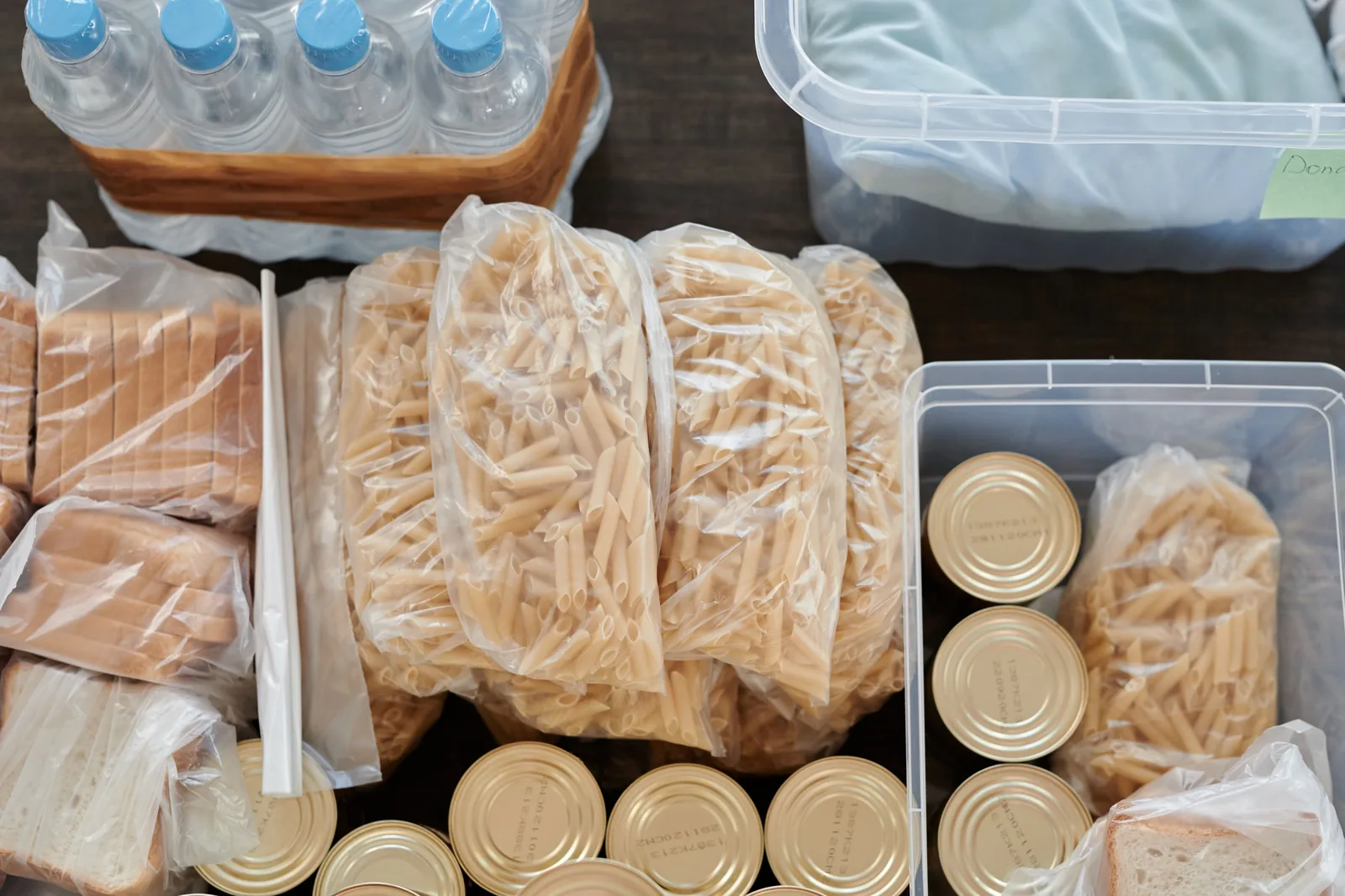
You don’t need to buy fourteen days of food in one trip. That’s how people talk themselves out of starting at all. Ready.gov recommends building toward a two-week supply for sheltering at home, beyond the standard 3-day go-bag amount. That’s where the 14-day number in this guide comes from. Add two or three extra shelf-stable items to your normal grocery run each week: an extra can of beans, a jar of peanut butter, a box of pasta. In about two months, without ever feeling the hit on one receipt, you’ve built a real pantry. Rotate it the same way you’d rotate stored water: FIFO, oldest to the front, new stock to the back, covered in the FIFO rotation guide.
FAQ
What should be in a 14-day emergency food pantry?
A mix of protein (canned meat, beans, peanut butter), carbs and calories (rice, pasta, crackers), no-cook options (granola bars, dried fruit), and morale food your family actually enjoys. Built from what they already eat, not specialty survival products.
Do I need freeze-dried food or MREs for emergency food storage?
Not necessarily. For most families, normal shelf-stable groceries bought a little extra at a time cover a 14-day pantry. Freeze-dried and MRE products have specific advantages covered in a separate comparison, but they’re not required to start.
How do I build a 14-day pantry without a big one-time expense?
Add 2-3 extra shelf-stable items to your regular grocery run each week. Over about two months, you’ll have a real pantry built without a single large purchase.
Should emergency food be different from what my family normally eats?
No. Food your family already eats and will actually finish is more useful than specialty products that sit untouched. Use the “would they eat this on a normal Tuesday” test.
How do I rotate a 14-day pantry so nothing expires unused?
Use a FIFO (first in, first out) system: place new purchases behind older stock, and use the oldest items first in normal cooking. Full method in the FIFO rotation guide.
Full outage plan is in the Power Outage Guide.
This article is for general preparedness education and follows official guidance (FEMA, CDC, CPSC, NWS, USDA) on safety points. In any emergency, instructions from local officials always come first.