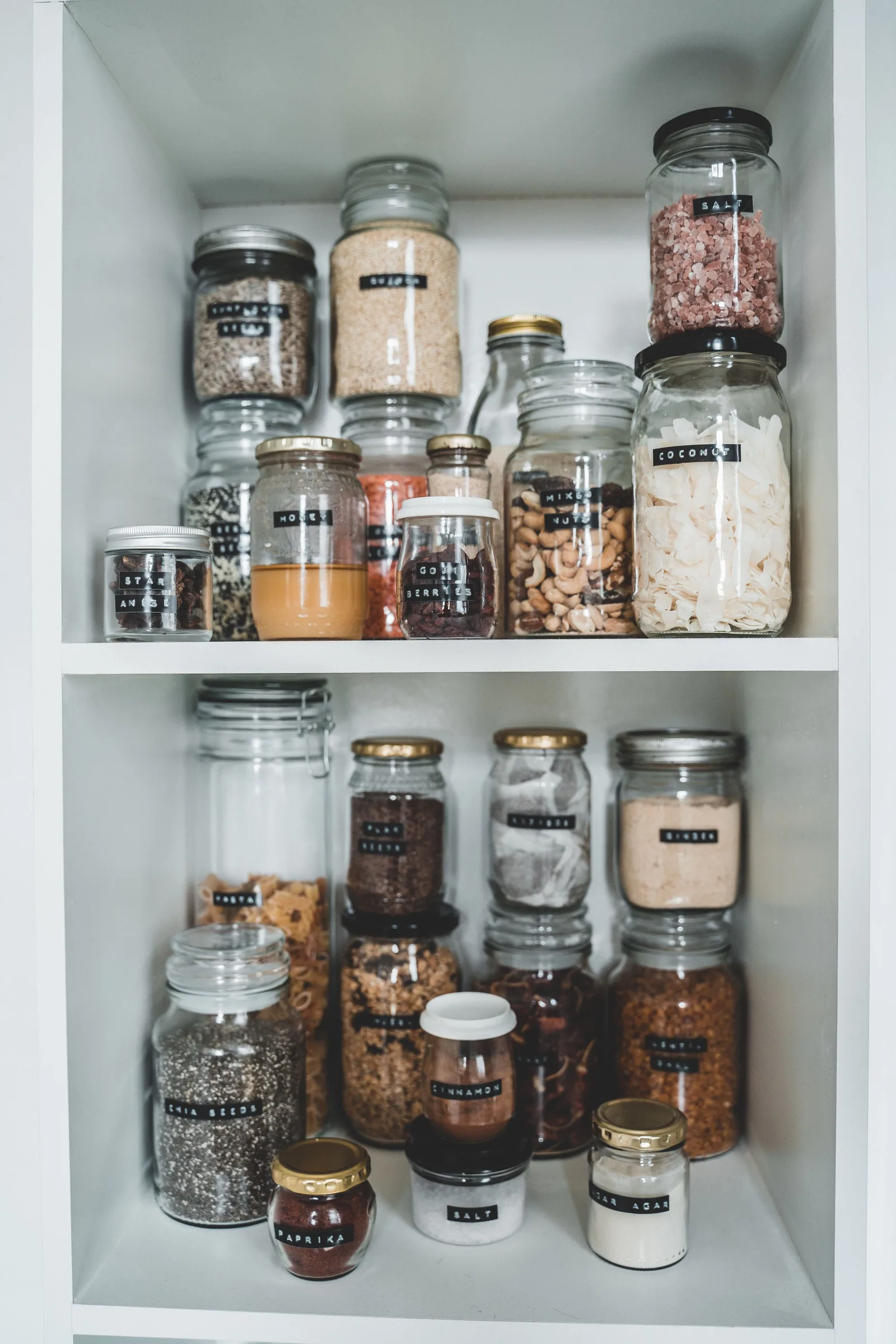
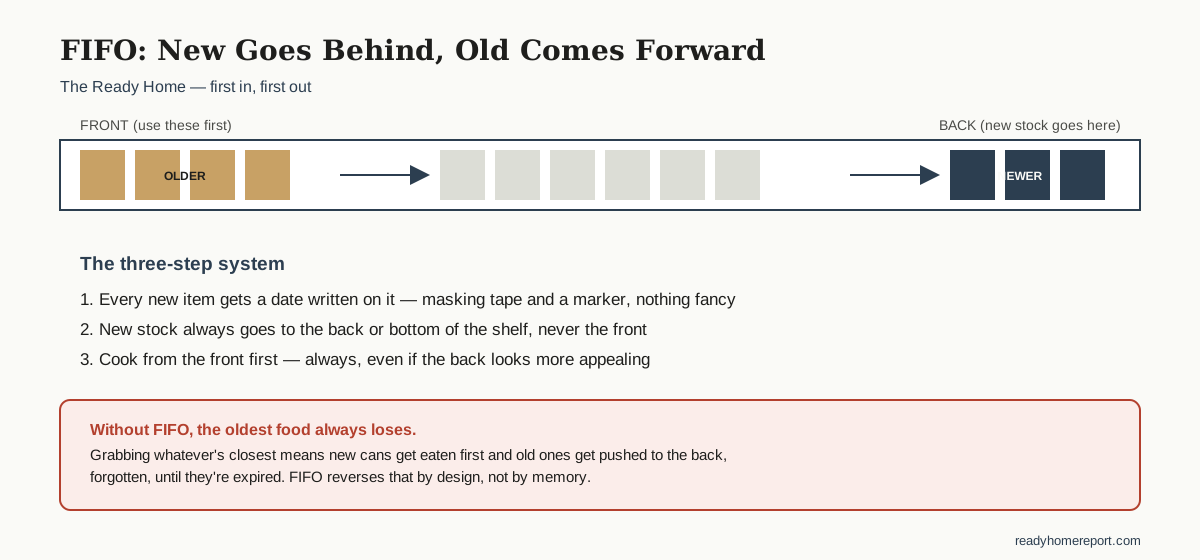
Write the date on everything when it goes on the shelf, put new stock at the back or bottom, and always cook from the front first. That’s the entire FIFO (first in, first out) system. No app, no spreadsheet, just a consistent rule about which direction food moves on the shelf. It’s the difference between a pantry that actually rotates and one where the oldest cans get pushed to the back and forgotten until they’re expired.
This is the least exciting article in this whole series and probably the one that saves the most food from going to waste, which is exactly why it’s worth doing right.
The three-step system
It really is this simple, which is the whole point. A rotation system people won’t actually follow doesn’t help anyone.
- Date it. Write the purchase date directly on the can or box with a permanent marker.
- New stock to the back. When you unpack groceries, older items move to the front first.
- Cook from the front. Always grab the oldest item first in normal, everyday cooking.
Why pantries fail without it
Left alone, human behavior does the opposite of FIFO automatically: you grab whatever’s closest and easiest to reach, which is almost always the newest can you just put away. The old stock drifts to the back, out of sight, and stays there until you’re cleaning out the pantry and find something two years past its date. This isn’t a discipline problem. It’s just what happens without a system, which is exactly why the system needs to be a physical habit (new goes behind) rather than something you try to remember.
Making it actually stick
Write the date directly on the can or box with a permanent marker when you buy it. Don’t rely on the printed date, which is often small, in an odd spot, or in a format that’s annoying to compare at a glance. Worth knowing: per USDA guidance, most of those printed “best by” dates are quality indicators, not safety cutoffs. Canned goods generally stay safe well past the date as long as the can itself is intact (no rust, dents, or swelling). Your own rotation date is still worth tracking for freshness, just don’t panic and toss something the day the printed date passes.
When you unpack groceries, physically move older stock to the front before placing new items at the back; it takes ten extra seconds and it’s the entire mechanism that makes this work. Tie your twice-yearly check (the same one from the water rotation guide) to actually using the oldest items in normal meals that week, not just inspecting them.
FAQ
What does FIFO mean for food storage?
First in, first out. The oldest stock gets used first. New purchases go to the back of the shelf, older items stay in front and get used before newer ones.
How do I set up a FIFO system in my pantry?
Date every item when you buy it, always place new stock behind or under older stock, and always cook from the front of the shelf first.
Why is FIFO important for emergency food storage?
Without it, the newest food gets grabbed first (it’s closest and easiest to reach) and older stock drifts to the back, unused, until it expires, which defeats the purpose of building a rotating pantry in the first place.
Should I use the printed expiration date or my own date label?
Write your own date when you buy the item. It’s easier to compare at a glance than hunting for a small printed date in an unpredictable format, and per USDA guidance most printed dates indicate quality rather than a hard safety cutoff anyway.
How often should I check pantry rotation?
Twice a year works well for most households. Tie it to a date you already track, the same rhythm as the water rotation check.
Full pantry-building guide is in The 14-Day Pantry.
This article is for general preparedness education and follows official guidance (FEMA, CDC, CPSC, NWS, USDA) on safety points. In any emergency, instructions from local officials always come first.