Rotate self-filled tap water every 6 months, commercial bottled water every 12-24 months (check the printed date), and nitrogen-sealed specialty cans can go 30-50 years. That’s the outlier, not the norm for most household storage, per general FEMA/Ready.gov guidance. Tie the check to something you already do twice a year, like the Tuesday Drill (the twice-a-year test where we kill the power on purpose and see what breaks) so it happens on autopilot instead of depending on memory.
This is the item on the outage kit that decays quietly. Batteries announce themselves when they’re dead. Water just sits there looking fine until it isn’t, which is exactly why it needs a schedule instead of a vibe check. This routine rotation check is different from what to do if your water may actually be contaminated (a flood, a burst line, an active boil-water advisory), which calls for CDC guidance, not a smell test; see the note below.
In this guide
The schedule, by container type
The clock starts differently depending on how the water got into the container:
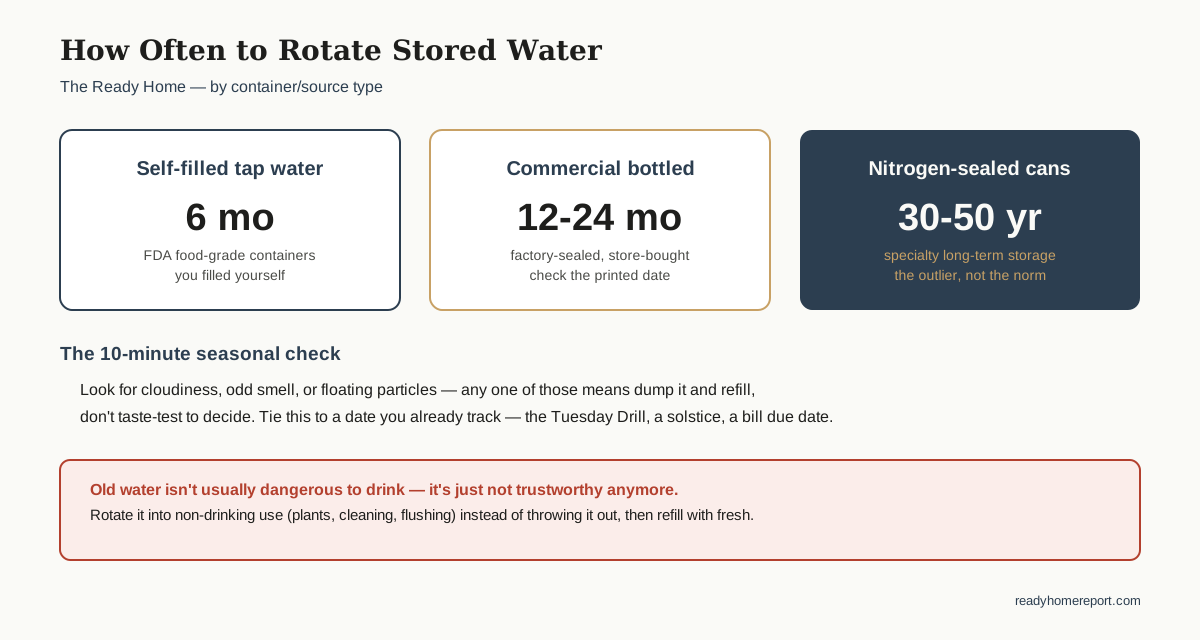
| Source | Rotate every |
|---|---|
| Self-filled tap water (FDA food-grade container) | 6 months |
| Commercial bottled water (factory-sealed) | 12-24 months (check printed date) |
| Nitrogen-sealed specialty cans | 30-50 years (the outlier, not the norm) |
The 10-minute seasonal check
Twice a year (I run mine with the Tuesday Drill, so it’s one less thing to remember separately), pull out the stored water and actually look at it. Cloudiness, an off smell, or anything floating means it’s time to dump and refill; don’t taste-test water you’re already unsure about to make the call. This takes about ten minutes for a typical household’s supply and it’s the single easiest maintenance task in the entire outage kit, which is exactly why it’s the one most likely to get skipped without a fixed date attached to it.
This routine check assumes your water was stored correctly and nothing unusual has happened to it. If you suspect real contamination instead (flood exposure, a burst line, an active boil water advisory), don’t rely on smell or appearance alone to decide. Follow CDC/utility guidance for that specific situation instead.
What to do with old water instead of dumping it
Water past its rotation date usually isn’t dangerous. It’s just not something I’d trust for drinking anymore. Rather than pouring it out, route it into non-drinking use: water the plants, use it for cleaning, or keep it for flushing toilets during your next drill. Then refill the container with fresh water and reset the date. Nothing goes to waste, and the rotation habit gets reinforced instead of feeling like you’re throwing away a resource for no reason.
FAQ
How often should I replace stored emergency water?
Every 6 months for water you filled yourself in a food-grade container, 12-24 months for factory-sealed commercial bottled water.
Does bottled water expire?
The water itself doesn’t really “expire,” but the plastic container can degrade and affect taste over time, which is why commercial bottled water carries a best-by date around 12-24 months.
How do I know if stored water has gone bad?
Check for cloudiness, an unusual smell, or visible particles. Any of those means replace it: don’t taste-test water you’re uncertain about. If you suspect actual contamination rather than routine aging, follow CDC guidance instead of a visual check alone.
Can I use old stored water for anything besides drinking?
Yes. Route water past its rotation date into plants, cleaning, or flushing rather than dumping it, then refill with fresh water.
How do I remember to rotate my water?
Tie it to a date you already track twice a year, like the Tuesday Drill, a solstice, or a recurring bill. A fixed calendar date works better than trying to remember on your own.
Full water storage system is in How to Store Water at Home.
This article is for general preparedness education and follows official guidance (FEMA, CDC, CPSC, NWS, USDA) on safety points. In any emergency, instructions from local officials always come first.