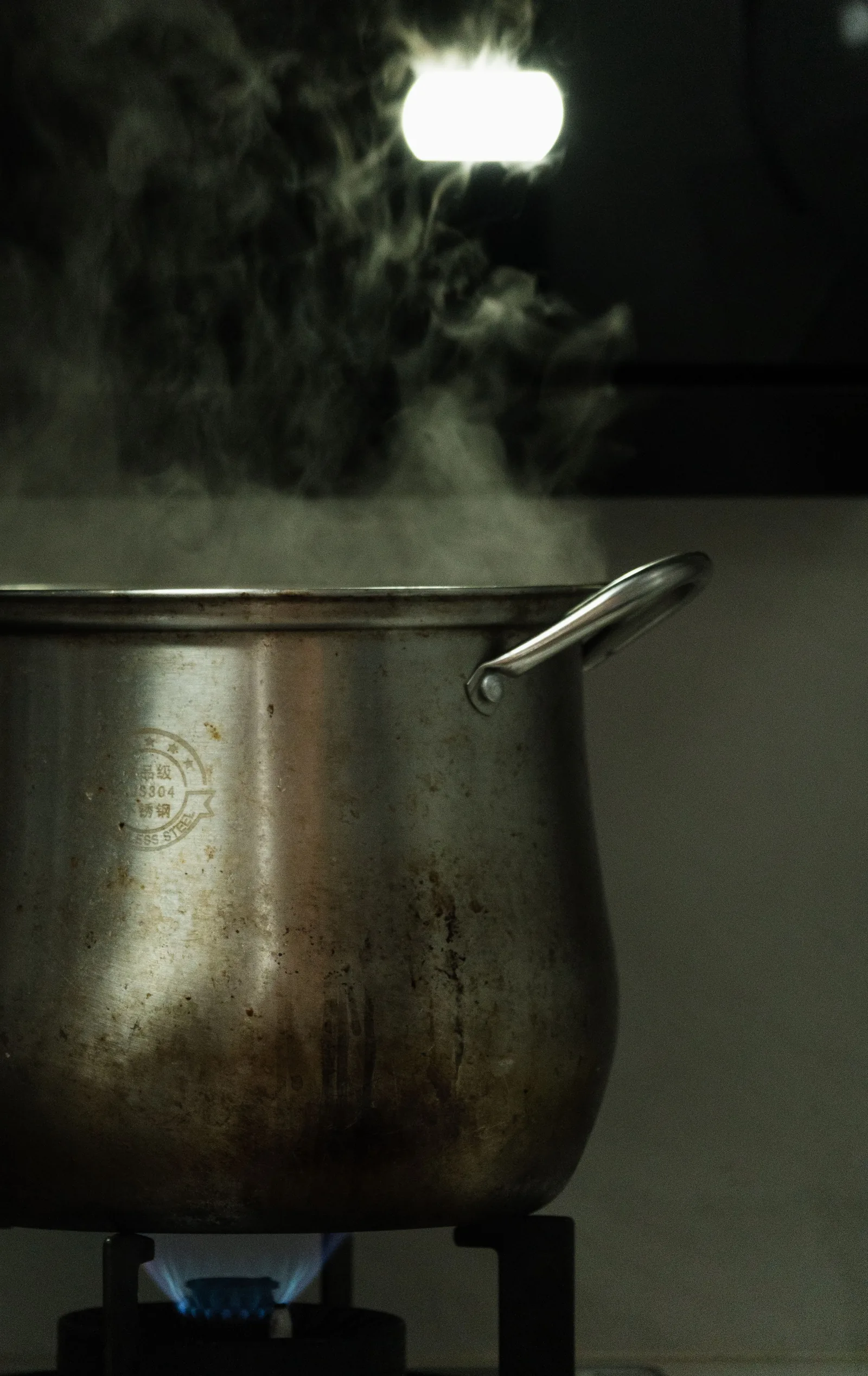
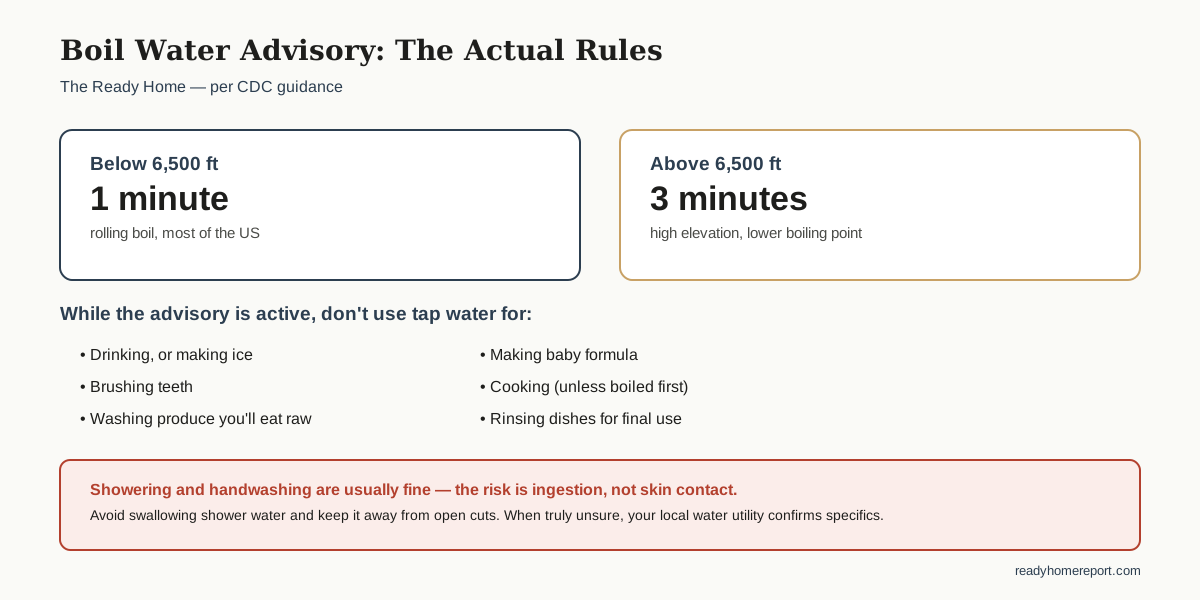
A boil water advisory means your utility found, or suspects, that bacteria, viruses, or parasites have gotten into the water supply, usually from a main break, a treatment failure, or a pressure loss that let contaminated groundwater seep in. Bring water to a rolling boil for 1 minute (3 minutes above 6,500 feet elevation, per CDC guidance) before drinking, cooking, brushing teeth, or making ice. Showering and handwashing are usually fine. The risk is from swallowing it, not skin contact.
The instinct is to panic a little the first time you get one of these on your phone. The actual response is boring and mechanical, which is exactly what you want in a water-safety situation.
Safety Note: read this before you boil anything
This guide is for Boil Water Advisories only, which are about biological contamination (bacteria, viruses, parasites) that boiling kills. If your notice instead says “Do Not Drink” or “Do Not Use”, that means a chemical contaminant. Boiling will not help and can even concentrate the chemical as the water evaporates. Switch to bottled water and follow your utility’s specific instructions instead. When in doubt, read the actual notice; the two look similar on a phone alert and call for opposite responses.
In this guide
What a boil water advisory actually means
Utilities issue these when something in the distribution system created a real risk of contamination: most often a water main break, a drop in system pressure that let outside water intrude through a crack or loose joint, or a treatment plant issue. It’s a precaution based on the mechanism of failure, not necessarily proof that your specific water is already contaminated, but there’s no way to tell from the tap, so the advisory treats all water in the affected area as suspect until testing clears it.
How long to boil, and why elevation matters
The CDC standard is a rolling boil (not just steaming, an actual full boil) for 1 full minute below 6,500 feet elevation, which covers the vast majority of the US. Above that elevation, water boils at a lower temperature, so the recommendation extends to 3 minutes to make sure the extra time compensates for the lower boiling point.
Let the boiled water cool naturally before you use it. Don’t add ice (which might be made from the same unsafe water) to speed it up.
What not to use tap water for
While the advisory is active, that means no unboiled tap water for drinking, making ice, brushing teeth, making baby formula, cooking (unless you boil it first), washing produce you’ll eat raw, or the final rinse on dishes. Handwashing and showering are generally fine, since the actual risk is ingestion. Just avoid swallowing shower water and keep it away from any open cuts. If you’re genuinely unsure about a specific use, your utility’s advisory notice usually covers edge cases, or you can call them directly.
How long an advisory usually lasts
Typically 24-48 hours, though it can run longer depending on what caused it and how quickly lab results confirm the water is safe again. The advisory doesn’t lift until testing actually clears the water. Not on a schedule, so keep boiling until your utility officially announces it’s over, not just when it feels like enough time has passed.
This is exactly why stored water matters: if you’ve got your 14-day supply already sealed and set aside, a boil water advisory is a minor inconvenience instead of an active problem you’re solving in real time. If the source is actually compromised rather than just under advisory, the filter vs. tablets vs. boiling comparison covers what to reach for next.
FAQ
How long do I need to boil water during a boil water advisory?
One minute at a rolling boil for most of the US (below 6,500 feet elevation), 3 minutes above that elevation, per CDC guidance.
Is it safe to shower during a boil water advisory?
Generally yes. The risk is from ingesting the water, not skin contact. Avoid swallowing shower water and keep it away from open cuts or wounds.
Can I use tap water to brush my teeth during a boil water advisory?
No, use boiled or bottled water for brushing teeth during an active advisory, since it involves water contact with your mouth.
How long does a boil water advisory usually last?
Typically 24-48 hours, but it depends on the cause and how long lab testing takes to confirm the water is safe. It ends when your utility officially lifts it, not on a fixed timeline.
What causes a boil water advisory?
Most commonly a water main break, a pressure loss that lets contamination intrude, or a treatment plant issue: anything that creates a real risk of bacteria, viruses, or parasites entering the distribution system.
What’s the difference between a boil water advisory and a “do not drink” advisory?
A boil water advisory covers biological contamination, which boiling kills. A “do not drink” or “do not use” advisory means a chemical contaminant, which boiling does not remove and can even concentrate. Switch to bottled water and follow your utility’s specific instructions instead.
Full water storage system is in How to Store Water at Home.
This article is for general preparedness education and follows official guidance (FEMA, CDC, CPSC, NWS, USDA) on safety points. In any emergency, instructions from local officials always come first.