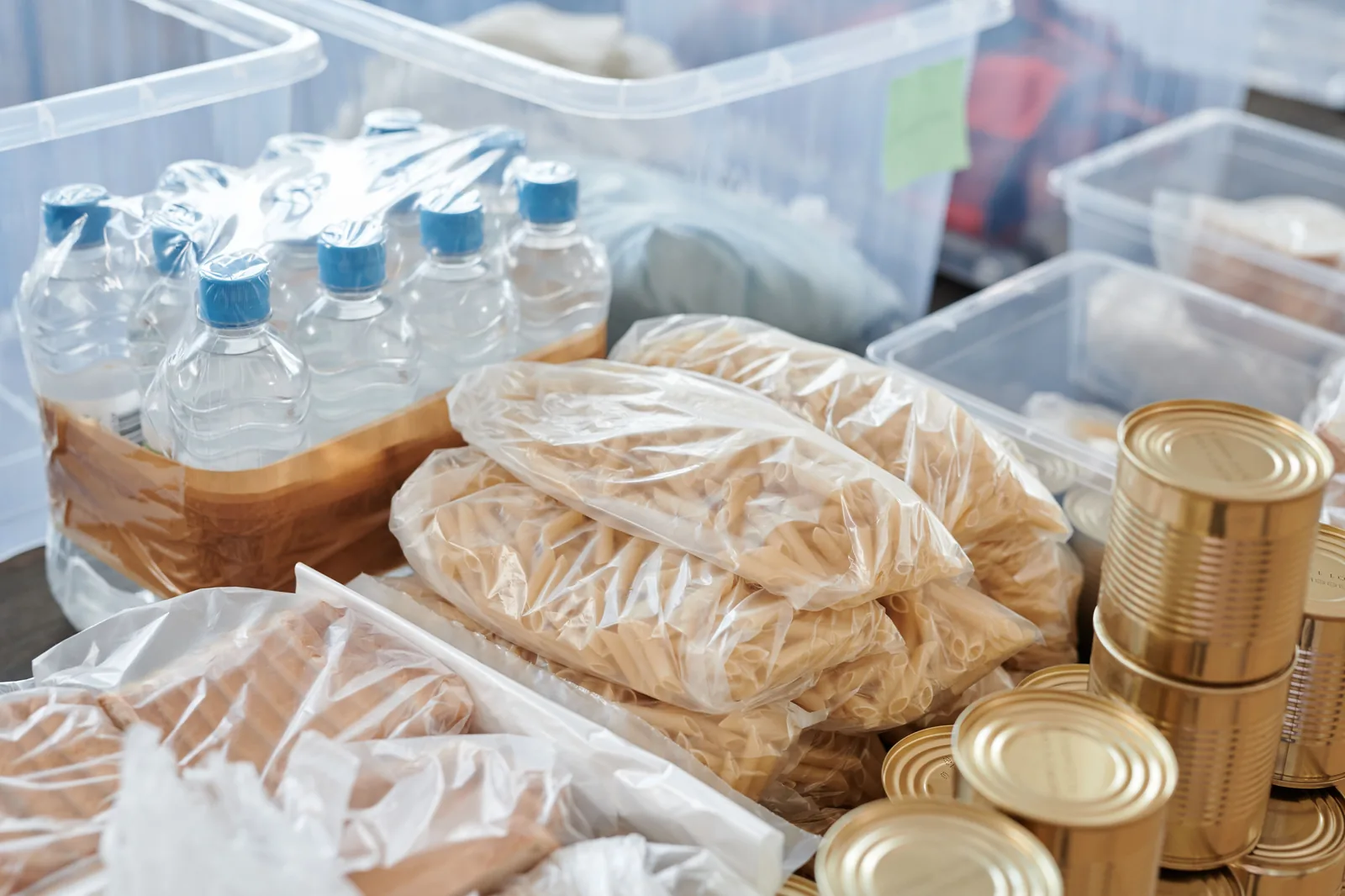
Store one gallon of water per person per day (half for drinking, half for cooking and hygiene), starting at a 3-day minimum and building toward 14 days. Use FDA food-grade containers or factory-sealed commercial bottled water, keep it somewhere cool and dark (50-70°F, out of direct sunlight), and replace self-filled containers every 6 months. That’s the whole system. Here’s how to actually build it without turning your garage into a warehouse.
Water is the one I underrated before Uri. We had food. We had flashlights. We had maybe four gallons of water total, and by day three I was melting snow on the gas stove to flush toilets, a workaround that only existed because Texas happened to have snow that week. It doesn’t always.
In this guide
How much water you actually need
The math is simple and the number surprises people every time they actually run it for their household. See the full household-size breakdown if you want the exact number for your family instead of the average.
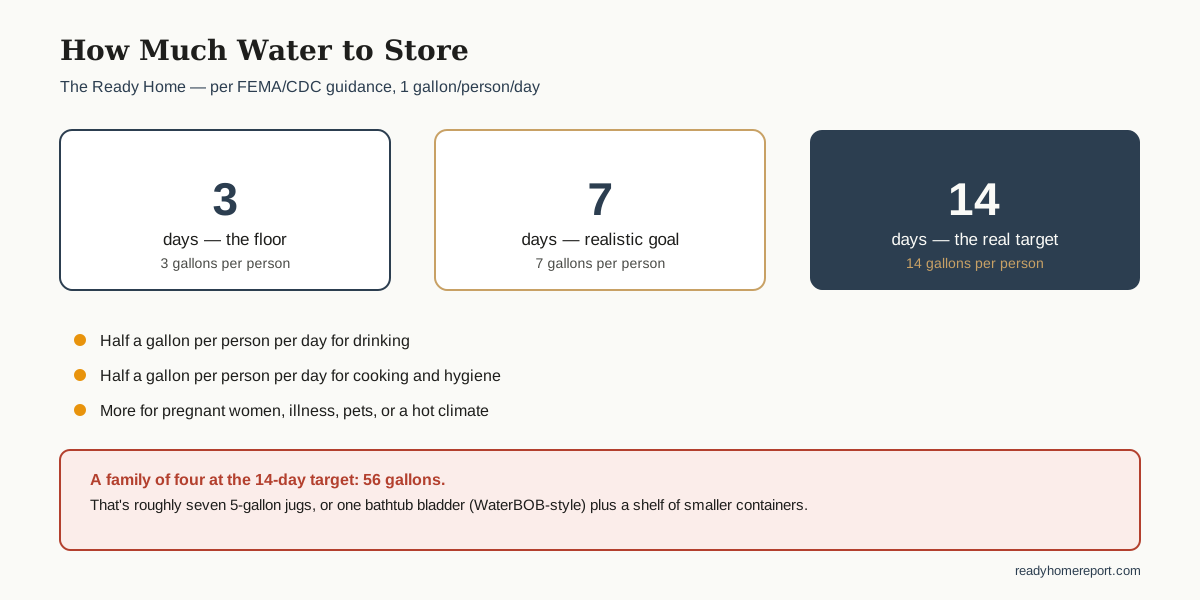
A family of four aiming for the real 14-day target needs 56 gallons. More than most people picture when they hear “store some water.” That’s roughly seven 5-gallon jugs, or one bathtub bladder (WaterBOB-style) plus a shelf of smaller containers for the portion you’ll actually be drinking day to day. Add more for pregnant household members, anyone sick, pets, or if you’re somewhere that runs hot. Heat increases how much your body needs just to keep up.
Containers: what actually works
Factory-sealed commercial bottled water is the easiest answer. Buy it, store it in the original sealed container, done. If you’re filling your own, use actual FDA food-grade containers (camping and surplus stores carry them), not just anything with a lid. Two-liter soda bottles work in a pinch if you clean and sanitize them first. What doesn’t work: milk jugs. Their thin plastic breaks down over time and they’re nearly impossible to fully clean of proteins and sugars that milk leaves behind, no matter how much you rinse.
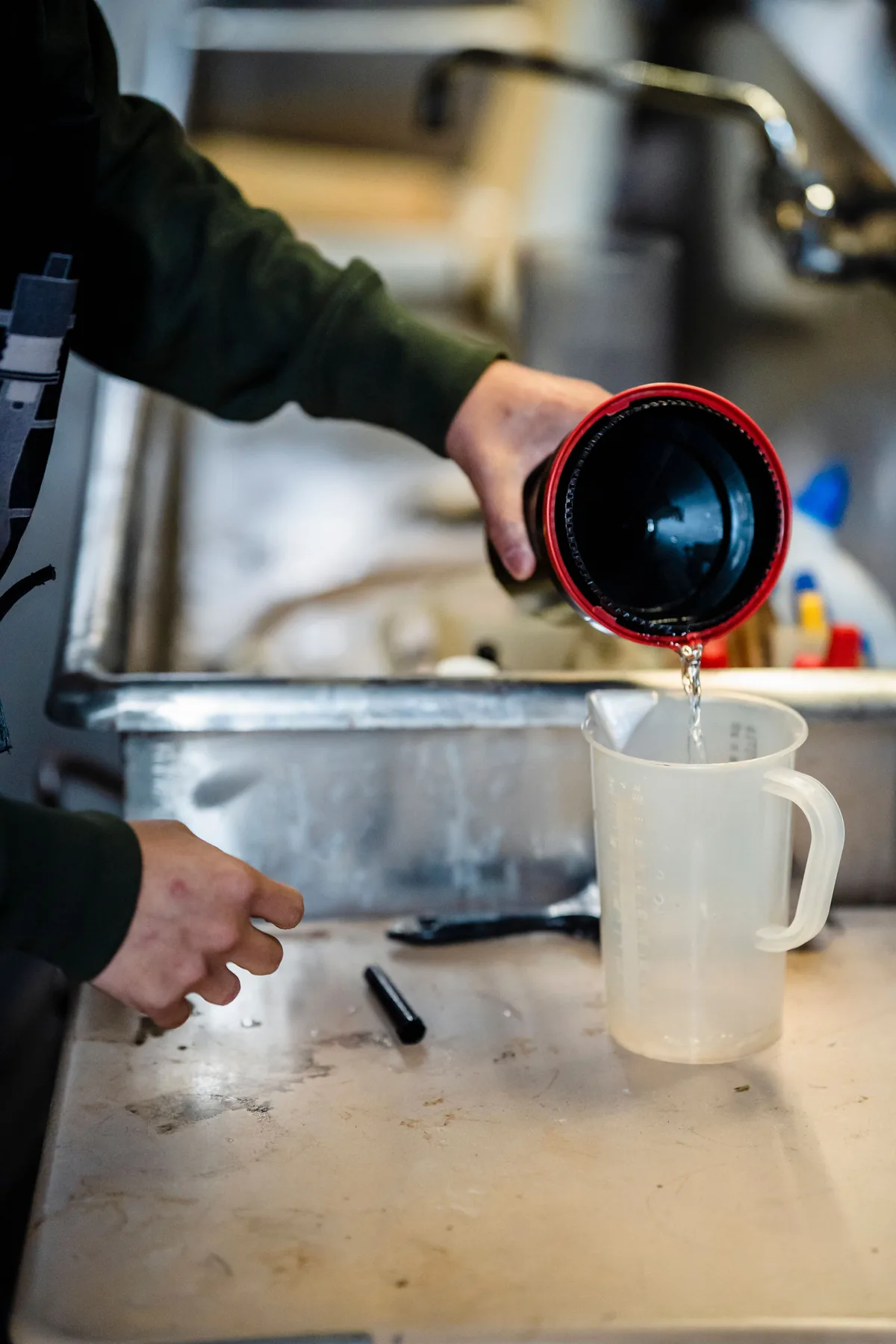
If you’re filling your own container from the tap, sanitize it first: 1 teaspoon of unscented liquid chlorine bleach (5-9% sodium hypochlorite, nothing scented or “splash-free”) per quart of water, swish it around to coat every surface, then rinse well before filling for real. The ratio and method follow CDC guidance for creating and storing an emergency water supply.
Where to keep it
Cool and dark beats convenient. Aim for 50-70°F, away from direct sunlight, which degrades plastic and can accelerate any off-tastes developing over time. Split your storage across more than one location in the house if you can (a garage shelf plus a closet, not all fifty-six gallons in one spot) so a single damaged area doesn’t take out your entire supply. Mark self-filled containers with the date you filled them. A piece of painter’s tape and a marker is the whole system, and it’s what tells you when it’s time for the rotation check.
If you have to treat your own water
Properly stored, sealed water doesn’t need treatment before you drink it. That’s the entire point of storing it right in the first place.
Safety Note: treating water is a last resort, not a first move
Stored water you sealed yourself doesn’t need treatment. Only treat water from an unknown or compromised source: a boil water advisory, a well after flooding, or water you’re genuinely unsure about. If it’s cloudy, filter it first (a coffee filter or clean cloth works for sediment) before boiling or chemically treating it; cloudy water can shield pathogens from both methods. For infants, pregnant household members, or anyone immunocompromised, follow CDC guidance directly rather than the general rule of thumb.
The situation where you do need to treat water is different: a boil water advisory, a well you’re not sure about after flooding, or any source you’re genuinely uncertain of. That’s covered in depth in the boil water advisory guide and the filters vs. tablets vs. boiling comparison, since the right method depends on what’s actually wrong with the water.
FAQ
How much water should I store per person?
One gallon per person per day: half for drinking, half for cooking and hygiene. Store a minimum of 3 days, with 14 days as the realistic target.
Can I store tap water long-term?
Yes, in FDA food-grade containers, sanitized first if you’re reusing a container. Replace self-filled water every 6 months; factory-sealed commercial bottled water can go 12-24 months.
Is it safe to reuse milk jugs for water storage?
No. Milk jugs are hard to fully clean of residue and their thin plastic degrades faster than proper storage containers. Use FDA food-grade containers or sealed commercial bottled water instead.
Where should I store emergency water at home?
Somewhere cool and dark, 50-70°F, out of direct sunlight, and ideally split across more than one location in the house.
Do I need to treat water before storing it?
No. Properly sourced tap water in a sanitized, sealed container doesn’t need treatment before storage. Treatment matters for water from an unknown or compromised source, not water you stored yourself.
Full outage plan is in the Power Outage Guide.
This article is for general preparedness education and follows official guidance (FEMA, CDC, CPSC, NWS, USDA) on safety points. In any emergency, instructions from local officials always come first.