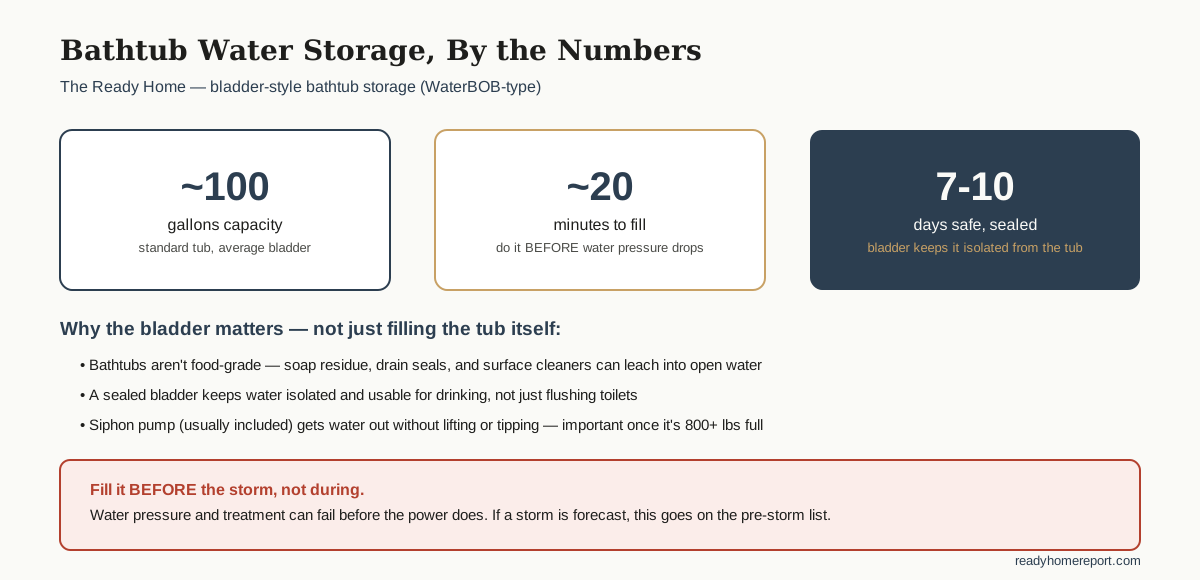
A bathtub water bladder (WaterBOB is the best-known brand) is a large food-grade plastic liner that fills your existing bathtub, holding around 100 gallons that stays sealed and isolated from the tub itself. It takes about 20 minutes to fill from the tub faucet and comes with a siphon pump to get water out without lifting or tipping a container that weighs 800+ pounds full. Fill it before a forecasted storm, not during. Water pressure and treatment can fail before the power does. This isn’t medical advice; if you have specific health vulnerabilities, treat any emergency water source with extra caution.
This is the single biggest jump in stored water capacity for the least effort of anything in this whole series. One bladder gets you most of the way to the family target from the water-amount guide, in twenty minutes, using a tub you already have.
I learned the flush-water problem the hard way, just not with a bladder, with a pot of snow. By day three of Uri, with no water pressure and nothing pre-staged, I was melting snow on the gas stove to get water for the toilets, one pot at a time. It worked because Texas happened to have snow that week; it wouldn’t have worked in a hurricane. A sealed bathtub bladder would have solved that exact problem in the twenty minutes before the pressure dropped, instead of me improvising with a stovetop three days in.
In this guide
What a bathtub bladder actually is
It’s a large, heavy-duty plastic liner, roughly the size and shape of your tub, that you drape in and fill with the tub faucet. Once full, it’s a sealed reservoir sitting inside, but isolated from, your actual tub. Most kits fold down to the size of a small box and include a hand siphon pump, since scooping or tipping a full bladder isn’t realistic once it’s holding close to a thousand pounds of water.
Why not just fill the tub directly
You can, and it’s better than nothing for flushing toilets, but bathtubs aren’t food-grade surfaces. Soap residue, cleaning product film, and the drain seal itself can leach into standing water over several days, which is fine for non-drinking use but not something you want to drink. A sealed bladder keeps the water isolated from all of that, which is the entire reason the product exists instead of just being “fill your tub.”
When to fill it
As soon as a storm, hurricane, or major winter event is forecast for your area. Before the power or water pressure is actually affected. Water systems can lose pressure or treatment capability before the grid goes down, so waiting until the outage has already started can mean filling from a tap that’s no longer reliable itself. This goes on the same pre-storm checklist as charging power banks and freezing water jugs for the fridge. See the full hurricane readiness playbook for the rest of that list.
Once you’re done with it, most bladders are single-use. Drain it through the siphon (into containers, or straight down the drain if you don’t need to keep it), let it dry, and plan on a fresh one for next time rather than trying to reuse and reseal it.
FAQ
How much water does a WaterBOB hold?
Around 100 gallons in a standard tub, though exact capacity varies by tub size and specific product.
How long does it take to fill a bathtub water bladder?
About 20 minutes from a standard tub faucet, assuming normal water pressure.
Can I just fill my bathtub with water instead of using a bladder?
You can for non-drinking uses like flushing toilets, but the tub surface isn’t food-grade. Soap residue and drain seals can contaminate the water over time. A sealed bladder keeps it isolated and safe to drink.
When should I fill a bathtub water bladder?
As soon as a storm or major weather event is forecast. Before power or water pressure is actually affected, not after.
Is bathtub-stored water safe to drink?
Water in a sealed, food-grade bladder is safe to drink as stored. Water sitting directly in an open bathtub should be treated as non-potable: fine for flushing, not for drinking.
Full water storage system is in How to Store Water at Home, and if you’re rotating this along with the rest of your supply, see how often to rotate stored water.
This article is for general preparedness education and follows official guidance (FEMA, CDC, CPSC, NWS, USDA) on safety points. In any emergency, instructions from local officials always come first.