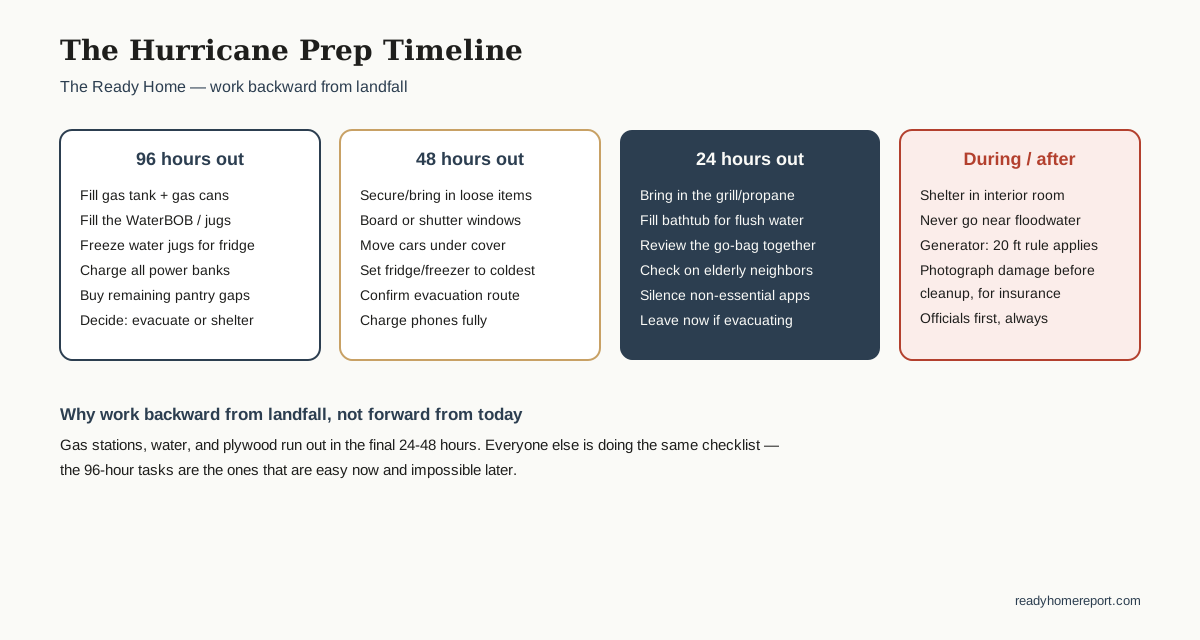
Work backward from landfall, not forward from today: at 96 hours out, fill gas tanks and water containers, freeze water jugs, and finish pantry gaps. At 48 hours, secure loose outdoor items, board or shutter windows, and confirm your evacuation route. At 24 hours, bring in anything that burns fuel, fill the bathtub for flush water, and decide (evacuate or shelter) before roads get bad. If officials order a mandatory evacuation, that decision is already made for you: go.
Hurricanes are the one disaster on this site where you usually get real warning: days, not minutes. That’s the advantage. Waste it by starting the checklist at 24 hours instead of 96, and you’re fighting the same empty shelves and gas lines as everyone else who waited. I’ve never ridden out a hurricane myself, but Uri taught me the same lesson from a different direction: the households that do fine are the ones that started before the shelves emptied, not after.
In this guide
The prep timeline: work backward from landfall
This is the order that actually matters, built around what runs out first (gas, water, plywood) versus what can wait. At 96 hours: fill gas tanks and water containers (1 gallon per person per day, building toward the Ready.gov 2-week target for hurricane season), freeze water jugs for the fridge, close pantry gaps. At 48 hours: secure or bring in loose outdoor items, board or shutter windows, confirm your evacuation route and destination. At 24 hours: bring in anything that burns fuel, fill the bathtub for flush water, and make the evacuate-or-shelter call before roads get bad.
Evacuate or shelter: how to actually decide
If you’re in a mandatory evacuation zone, this isn’t a real decision. You leave, on the timeline officials give you, before roads clog. If you live in a mobile or manufactured home, this isn’t optional either, regardless of your flood zone. No manufactured home is a safe shelter from hurricane-force wind, and the evacuation has to happen before the storm closes in. If you’re not in either of those situations, weigh it honestly: storm surge risk (check your zone with your county’s emergency management site, not a guess), the age and condition of your home, whether you have a safe interior room away from windows, and whether you have the supplies from the Power Outage Guide to actually shelter for a week or more without help arriving fast. When genuinely unsure, leaving early beats leaving late. The roads get exponentially worse the closer you get to landfall.
During the storm
Stay in an interior room, away from windows, ideally on the lowest floor that isn’t at flood risk. Keep phones charged and in low-power mode. If the power’s already out, everything in the Power Outage Guide applies now: the food safety clock, the generator rule, all of it. Don’t go outside to check on things mid-storm; the worst injuries happen during lulls people mistake for the storm being over, particularly in the eye of a hurricane, where calm weather is followed by the second half of the storm arriving from the opposite direction.
Safety Note: officials outrank everything on this page
If local officials issue a mandatory evacuation order, go. Nothing in this guide is a reason to stay. Never drive or walk through floodwater, as little as 6 inches of moving water can knock over an adult, and 12 inches can carry away a car (NWS “Turn Around Don’t Drown”). Never touch a downed power line, and never run a generator in a garage or on a covered porch, even after the storm passes. Never plug a generator directly into a wall outlet either. It can backfeed power into the utility line and electrocute a lineworker who has no way of knowing the line is live. Use a transfer switch or plug appliances directly into the generator instead.
After: the dangerous part people underestimate
More people are hurt or killed in the cleanup after a hurricane than during it: chainsaw accidents, carbon monoxide from generators, contact with downed lines, and floodwater that looks passable but isn’t. Walk your property in daylight, photograph damage before you start cleaning up (insurance wants this, and you’ll forget details fast once you’re in motion), and treat every puddle of standing water as contaminated until you know otherwise. Flood water routinely carries sewage and chemical runoff. Run your generator by the same 20-foot rule as any other outage, no matter how long it’s been since the storm passed, and never connect it to your house wiring without a transfer switch.
This is one of five Storm Playbooks on this site. If a different risk is more likely where you live, see the heat wave readiness playbook, winter storm readiness, wildfire smoke basics, or tornado basics.
FAQ
How many days before a hurricane should I start preparing?
Start at 96 hours (4 days) before expected landfall. That’s when gas, water, and plywood are still available before everyone else empties the shelves in the final 24-48 hours.
Should I evacuate or shelter in place for a hurricane?
If you’re under a mandatory evacuation order, or you live in a mobile or manufactured home, leave. Otherwise, weigh your storm surge zone, home condition, and whether you have enough supplies to shelter safely for a week or more. When unsure, leaving early is safer than leaving late.
Is it safe to drive through flooded roads after a hurricane?
No. As little as 6 inches of moving water can knock over an adult, and 12 inches can carry away a car. Never drive or walk through floodwater.
Is it dangerous to plug a generator into a wall outlet during a hurricane outage?
Yes. Without a transfer switch, that “backfeeds” power into the utility line and can electrocute a lineworker repairing the grid. Use a transfer switch or plug appliances directly into the generator instead.
What’s the most dangerous part of a hurricane, during or after?
More people are injured or killed during cleanup than during the storm itself: chainsaw accidents, generator carbon monoxide, downed lines, and contaminated floodwater are the biggest risks after landfall.
What should I do during the eye of a hurricane?
Stay sheltered. The calm is temporary. The second half of the storm arrives from the opposite direction once the eye passes. Going outside during the lull is a common and dangerous mistake.
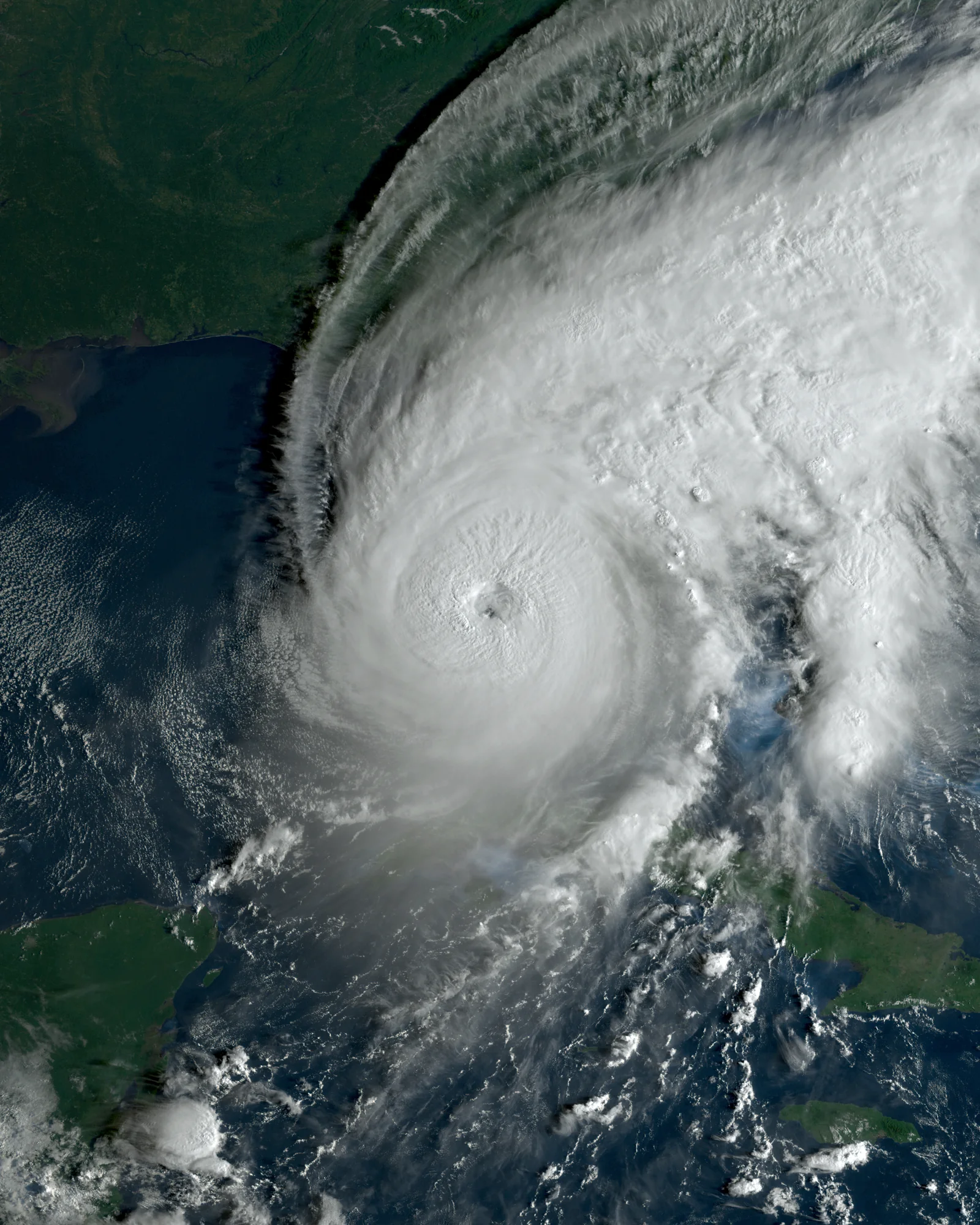
Cover photo: Hurricane Ian approaching Florida, September 28, 2022. NOAA GOES-16 satellite image, courtesy SSEC/CIMSS, University of Wisconsin–Madison.
This article is for general preparedness education and follows official guidance (FEMA, CDC, CPSC, NWS, USDA) on safety points. In any emergency, instructions from local officials always come first.