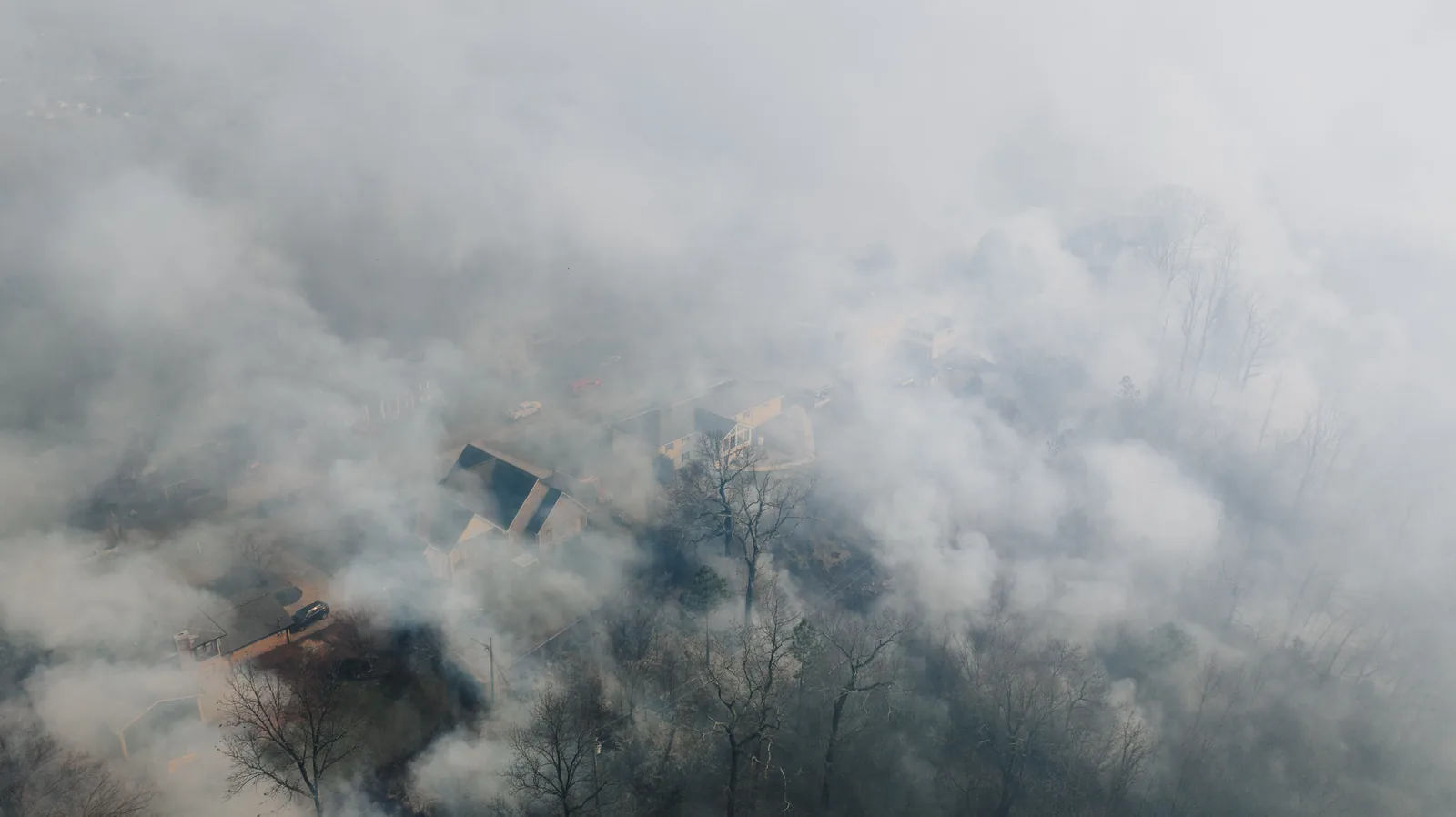
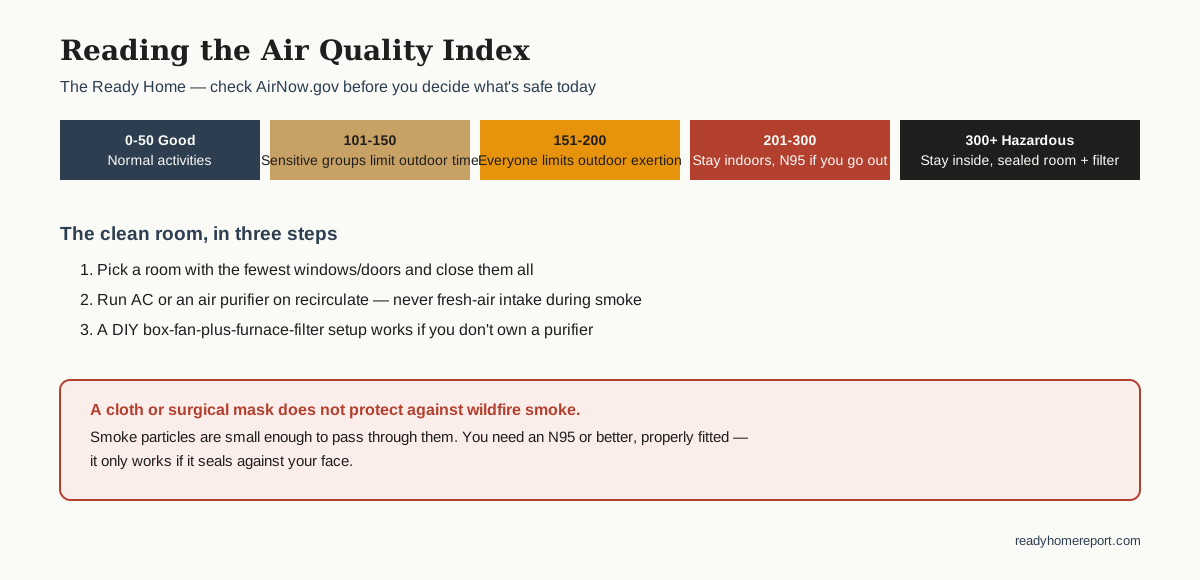
Check AirNow.gov before deciding what’s safe today. Wildfire smoke can make outdoor air dangerous long before you can smell it strongly or see it clearly. Above an AQI of 100, sensitive groups (kids, older adults, pregnant women, and anyone with asthma, COPD, or heart disease) should start limiting outdoor exertion. Above 150, that applies to everyone. Above 200, stay indoors in a sealed room running air conditioning or a purifier on recirculate, never fresh-air intake. A cloth or surgical mask does not protect against smoke particles. You need a properly fitted N95 or better. If evacuation orders come, they override everything else here.
Wildfire smoke isn’t a West Coast-only problem anymore. Smoke from Canadian and Western fires regularly pushes AQI into unhealthy ranges as far as the Midwest and Northeast. If you’re anywhere downwind of an active fire season, this guide applies to you. I haven’t personally worked a wildfire evacuation; what’s below comes from 20+ years managing building HVAC and indoor air systems, checked against current EPA and AirNow guidance.
If you have asthma, COPD, heart disease, or you’re pregnant, symptoms can start well before the numbers above. Treat these thresholds as upper limits, not targets, and check with your doctor about your own trigger point.
In this guide
What AQI level is safe during wildfire smoke?
Above an AQI of 100, sensitive groups should limit outdoor exertion; above 150, everyone should; above 200, stay indoors in a sealed room running AC or a purifier on recirculate, never fresh-air intake. Smoke can look dramatic at a moderate AQI, or look relatively clear while readings are genuinely dangerous, depending on particle size and wind: check AirNow.gov rather than judging by eye.
Building a clean room
Pick the room in your house with the fewest windows and doors, close everything, and run your AC or an air purifier on recirculate mode. Fresh-air intake pulls smoke straight in during bad air days, which defeats the purpose. If you don’t own a dedicated air purifier, a box fan with a furnace filter (MERV 13 or higher, per EPA guidance) taped or clipped to the intake side is a widely recommended, genuinely effective DIY option that costs a fraction of a commercial unit. Don’t run it unattended for hours at a stretch. The added resistance from the filter makes the motor work harder than it’s built for, and box fans aren’t rated for that kind of continuous strain.
Why a cloth mask does not help
Wildfire smoke particles are small enough to pass straight through cloth and surgical masks. They were never designed to filter particulate matter at that size. An N95 or better, properly fitted so it actually seals against your face (a beard or a loose fit defeats the seal), is the minimum that does real work. Keep a few in the outage kit specifically for smoke season if you’re anywhere near wildfire risk.
The evacuation go-bag, wildfire-specific
Beyond the standard outage kit basics, a wildfire go-bag needs a few things specific to this scenario: N95 masks for the whole family, a battery radio for evacuation updates (cell towers can go down near active fire), copies of important documents (insurance, ID) in a waterproof bag, and a full tank of gas at all times during fire season. Evacuation routes can back up fast, and you don’t want to be searching for an open gas station while a fire is advancing. If authorities issue an evacuation order, leave immediately; don’t wait to see how close it actually gets.
This is one of five Storm Playbooks on this site. If a different risk is more likely where you live, see the hurricane readiness playbook, heat wave readiness, winter storm readiness, or tornado basics.
FAQ
At what AQI level should I stay indoors during wildfire smoke?
Above 100, sensitive groups should limit outdoor exertion; above 150, that applies to everyone; above 200, stay indoors in a sealed, filtered room.
Does a regular face mask protect against wildfire smoke?
No. Cloth and surgical masks don’t filter fine smoke particles. You need a properly fitted N95 or higher-rated respirator.
How do I make a clean air room without an air purifier?
Close a room with few windows and doors, and run a box fan with a MERV 13 or higher furnace filter attached to the intake side, a widely used, effective DIY alternative. Don’t leave it running unattended for hours.
Should I run my air conditioner during wildfire smoke?
Yes, but set it to recirculate mode, not fresh-air intake, so it doesn’t pull smoke into the house.
What should be in a wildfire evacuation go-bag?
Standard outage kit basics plus N95 masks, a battery radio, copies of important documents, and a consistently full gas tank during fire season.
This article is for general preparedness education and follows official guidance (FEMA, CDC, CPSC, NWS, USDA) on safety points. In any emergency, instructions from local officials always come first.