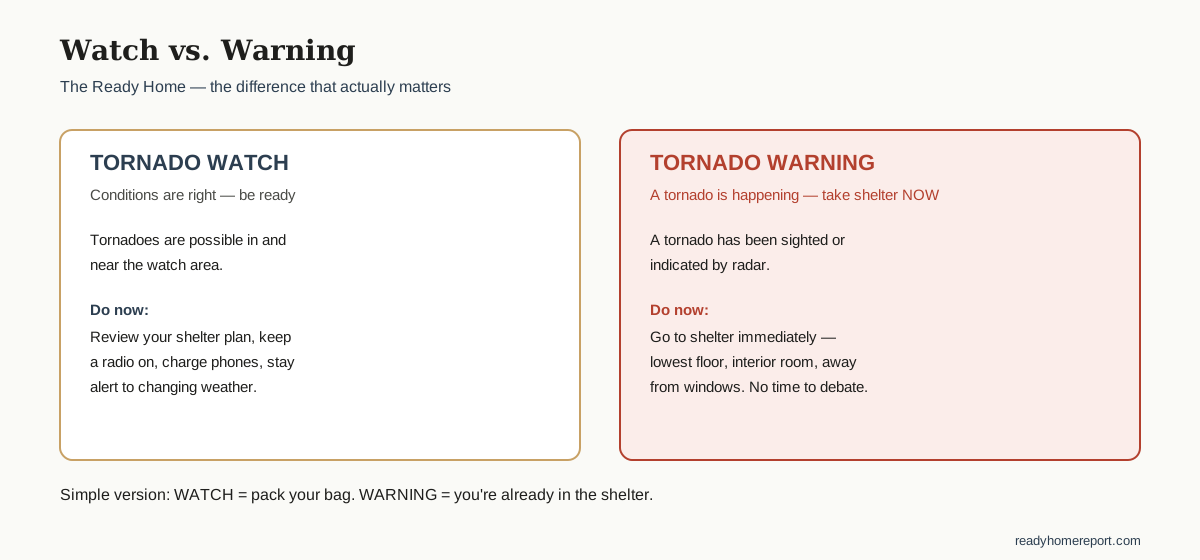
A tornado watch means conditions are right for one to form: review your shelter plan and stay alert. A tornado warning means one has actually been spotted or indicated by radar. Go to shelter immediately, no time to debate. At home, that means the lowest floor, an interior room with no windows, ideally a basement. In a car, don’t try to outrun a tornado; get to a sturdy building if one’s within reach, or stay in the car with your seatbelt on and your head below the windows if it isn’t.
Tornadoes give you the least warning of anything in this whole series, sometimes none at all. That’s exactly why the plan has to already exist before the sky turns green, not get figured out in the minute the sirens start.
In this guide
Watch vs. warning
A tornado watch means conditions favor tornado formation in the area: stay alert and review your shelter plan. A tornado warning means a tornado has actually been spotted or confirmed by radar. Take shelter immediately, with no time to wait and see. These two words get confused constantly, and that confusion costs people the seconds that matter most, per NWS guidance.
Where to actually shelter
Basement beats every other option, if you have one: specifically the interior part, away from windows and heavy objects on the floor above. No basement: the lowest floor, an interior room without windows (a bathroom, closet, or center hallway) as far from exterior walls as you can get. In twenty years of managing building safety plans, wide-span roofs (gyms, cafeterias, auditoriums) are the first thing I flag as a weak point; that roof structure is exactly what fails first in high wind. Skip those rooms entirely. Get under something sturdy (a heavy table, workbench) and cover yourself with a blanket, sleeping bag, or mattress if you have seconds to grab one on the way.
If you live in a mobile or manufactured home
None of the above applies. NOAA and FEMA are categorical: no room inside a mobile or manufactured home is safe in a tornado, tie-downs or not. The move has to happen before the storm gets close, not during a warning. Know your nearest sturdy building or community shelter now, and go there as soon as a watch is issued for your area.
If you are in a car when a warning hits
Don’t try to outdrive a tornado. They can change direction unpredictably and outpace a car in traffic. Get to the lowest floor of a sturdy nearby building if one’s within reach. If not, and you can’t get somewhere lower than the roadway, stay in the car: seatbelt on, head down below the windows, covered with a blanket or coat if you have one. Only if you can reach a ditch or depression noticeably lower than the road should you get out and lie flat there, covering your head with your hands. Know that it exposes you to flying debris, hail, lightning, and flash flooding, which is why Ready.gov treats it as the last option, not the first. Never shelter under an overpass. It doesn’t protect you, and the structure can actually funnel and increase wind speed, making it more dangerous than open ground.
Signs a tornado may be approaching
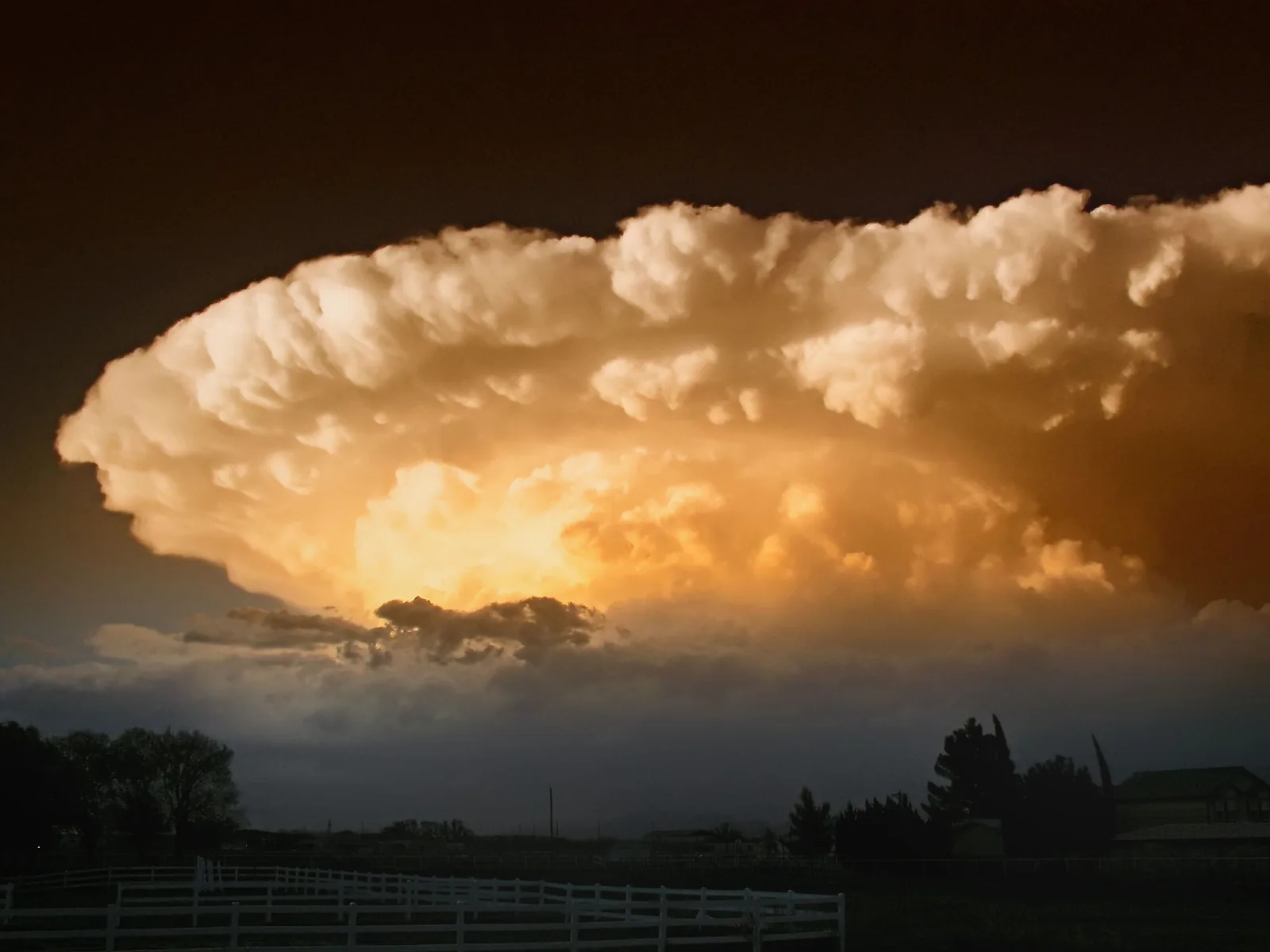
A rotating, funnel-shaped cloud; an approaching cloud of debris even without a visible funnel; a dark or greenish sky; large hail; and a loud, continuous roar often described as sounding like a freight train. Any of these, especially with a warning already active, means shelter now rather than stepping outside to look.
This is one of five Storm Playbooks on this site. If a different risk is more likely where you live, see the hurricane readiness playbook, heat wave readiness, winter storm readiness, or wildfire smoke basics.
FAQ
What’s the difference between a tornado watch and a tornado warning?
A watch means conditions favor tornado formation in the area: be ready. A warning means a tornado has been sighted or detected by radar: take shelter immediately.
Where is the safest place to shelter during a tornado?
The interior part of a basement if you have one. Without a basement, an interior room with no windows on the lowest floor: a bathroom, closet, or center hallway.
Is it safe to shelter in a mobile or manufactured home during a tornado?
No. No room inside one is safe, regardless of tie-downs. The decision to evacuate to a sturdy building has to be made before the storm arrives, not during the warning.
Is it safe to shelter under a highway overpass during a tornado?
No. Overpasses don’t provide real protection and can actually funnel and increase wind speeds, making them more dangerous than open, low ground.
What should I do if I’m driving when a tornado warning is issued?
Get to a sturdy building if possible. If not, stay in the car with your seatbelt on and head below the windows. Getting out to lie in a ditch is a last resort only. It exposes you to debris, lightning, and flash flooding.
What sound does a tornado make?
Often described as a continuous roar similar to a freight train, along with a rotating funnel cloud, debris cloud, dark or greenish sky, and large hail as other warning signs.
This article is for general preparedness education and follows official guidance (FEMA, CDC, CPSC, NWS, USDA) on safety points. In any emergency, instructions from local officials always come first.