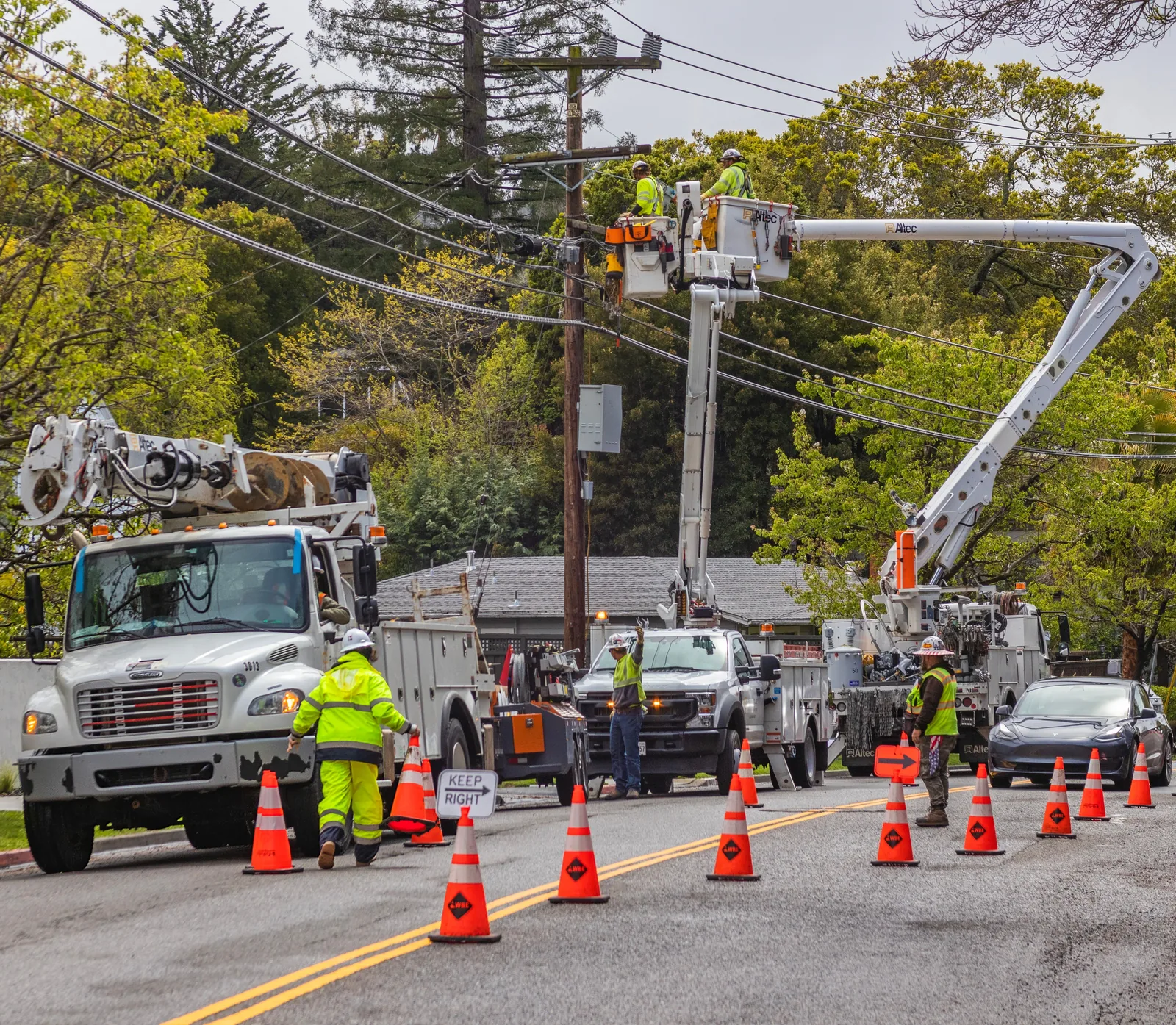
Report your outage to your utility even if you assume the whole street already called it in. Utilities map outages partly from customer reports, and yours might be the one that confirms the problem. Save the outage number and website in your phone now, while things still work. The restoration estimate you get back is a system-generated guess based on historical data, not a promise, and it will move as crews learn more.
In this guide
Report it even if you assume someone else did
This is the mistake I made for years: assuming that with an entire street dark, somebody else had obviously already called it in. Utilities build their outage maps partly from customer reports layered on top of automated grid signals, and a report from your specific address helps confirm the scope and location of the problem, especially for smaller or more localized outages. Report by phone, app, text, or website (whichever your utility supports) and do it early rather than waiting to see if it resolves itself.

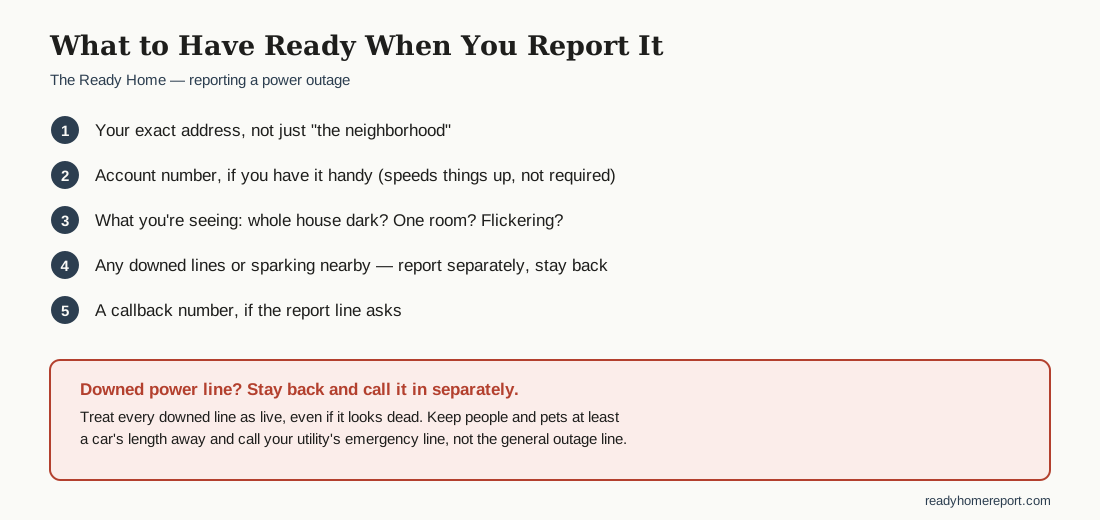
Here’s what actually speeds up the call, so you’re not fumbling for it with a phone at 12% battery:
What that restoration estimate actually means
The Estimated Time of Restoration (ETR) you get after reporting is generated from historical outage data for similar events, not a technician’s on-the-ground assessment, especially in the first hour or two. Expect it to be rough at first and to tighten up as crews assess the actual damage. During Uri, our estimate moved every few hours for two straight days, sometimes getting longer instead of shorter as the real scope of the grid failure became clear. Treat the first ETR as a starting point for planning, not a countdown clock.
Downed lines: the one absolute rule
Never approach a downed power line, whether it looks dead, sparking, or perfectly ordinary lying across your yard. Treat every downed line as energized until a utility crew confirms otherwise. Lines can carry current even when they look inert, and ground current around a downed line can be lethal well before you’d physically touch it. Keep people, kids, and pets at least a car’s length back, and call your utility’s emergency line specifically, not just the general outage number.
FAQ
Should I report a power outage if my whole street is dark?
Yes. Utilities use customer reports alongside automated grid data, and your specific report can help confirm and locate the problem, especially for smaller outages.
How accurate are utility restoration time estimates?
The first estimate is usually system-generated from historical data, not an on-site assessment, so treat it as a rough starting point. It typically updates as crews assess the actual damage.
What should I do if I see a downed power line?
Stay at least a car’s length away, assume it’s live no matter how it looks, keep kids and pets back, and call your utility’s emergency line to report it separately from a general outage report.
What information do I need to report a power outage?
Your exact address, what you’re observing (whole house dark, flickering, one room), and a callback number if asked. Your account number speeds things up but usually isn’t required.
How do I find my utility’s outage reporting number?
Check a recent bill, your utility’s website, or their app. Save it in your phone now. Searching for it during an outage with a low battery is exactly the wrong time to look it up.
Full outage plan and the rest of the checklist are in the Power Outage Guide.
This article is for general preparedness education and follows official guidance (FEMA, CDC, CPSC, NWS, USDA) on safety points. In any emergency, instructions from local officials always come first.