
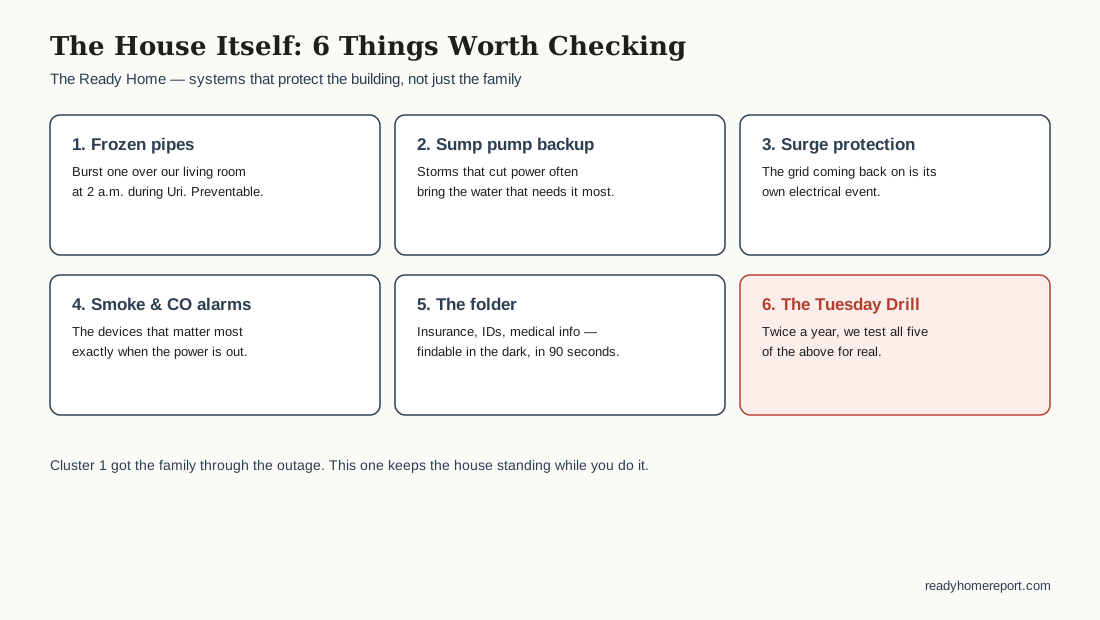
A power outage doesn’t just take away your lights. It stresses six systems in your house that normally run quietly in the background: the pipes that can freeze without heat, the sump pump that can’t fight a flooded basement without power, the electronics exposed the instant the grid snaps back on, the smoke and CO detectors that are suddenly running on nine months of unnoticed backup battery, the documents you can’t find in the dark, and the plan nobody’s actually tested. Cluster 1 on this site covers getting your family through a power outage. This one is about keeping the house standing while you do it.
I learned most of this the expensive way. Six days without power during Winter Storm Uri, and the thing that actually cost us money wasn’t the food we lost or the six days of misery. It was the pipe that burst over our living room on day four, because nobody in my very well-prepared, very professionally-facilities-managed household had done the fifteen-minute thing that prevents it.
- Frozen pipes: let faucets drip, know your main shutoff
- The sump pump: battery backup for storms that flood while the power’s out
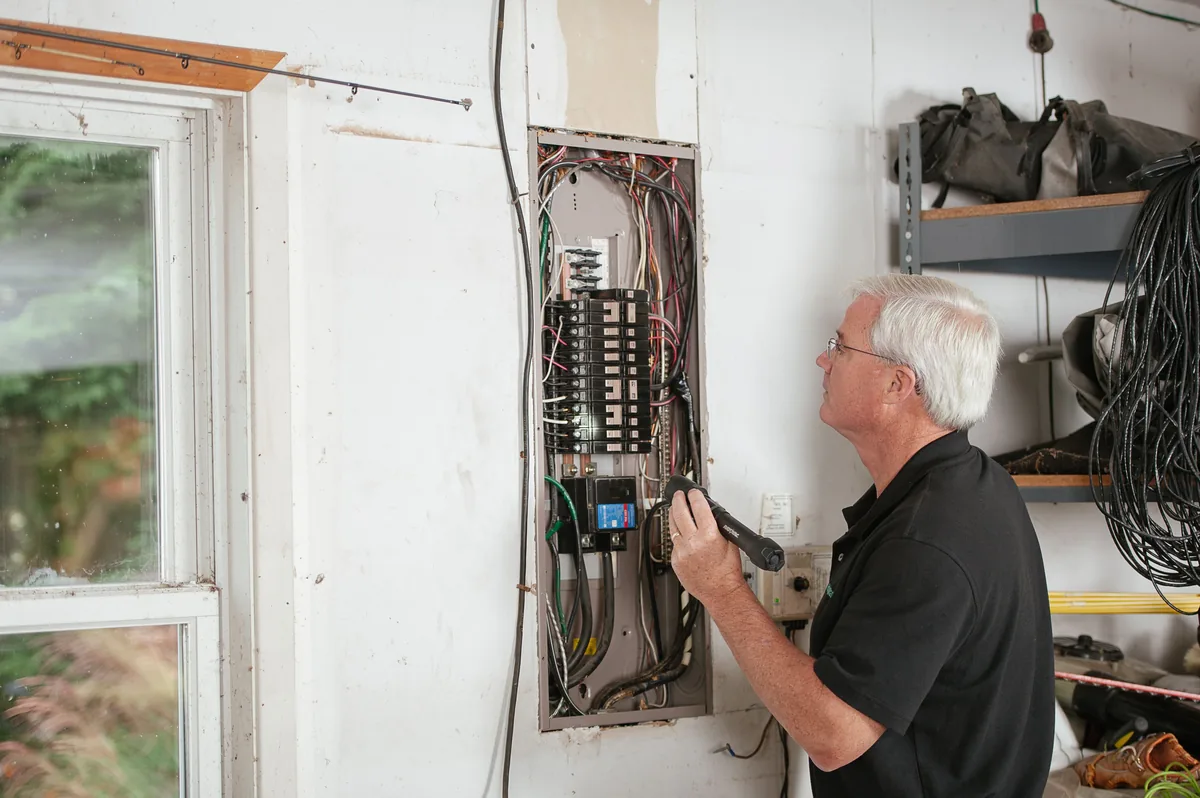
- Surge protection: one install at the panel covers the whole house
- Smoke & CO detectors: verify the backup battery, not just the alarm sound
- The folder: insurance, IDs, medical info, findable in the dark
- The Tuesday Drill: test all five, twice a year, for real
In this guide
Frozen pipes: the power outage risk to your house itself
If it’s cold enough for your pipes to freeze and the power’s out, act inside the first few hours: let faucets on exterior walls drip slowly (this alone is often the difference), open cabinet doors under sinks so warm air reaches the pipes, and if the outage looks long, know how to shut off your main water valve and drain the lines before you leave the house or go to bed. Full walkthrough (including exactly why our pipe burst and what I do differently now) in the frozen pipes guide.
The sump pump
The storms that knock your power out are frequently the same storms that fill your sump pit. A pump with no power is a pump doing nothing, right when you need it most. A battery backup unit (plugs inline between your existing pump and the wall, kicks in automatically) buys hours to a couple of days depending on how hard it’s raining, and pairs directly with the surge protection below since both live at your electrical panel. Details, runtimes, and what to actually buy: the sump pump guide.
Surge protection
The average home eats around 20 small power surges a day, per commonly-cited electrician estimates, mostly from its own appliances cycling on and off. The one that costs real money is bigger: a lightning strike near the line, or the jolt when the utility restores power to a whole neighborhood at once. A whole-home surge protector installed at your panel is a one-time job that covers everything hardwired in the house, not just what’s plugged into a power strip. Worth it or not, and what it actually costs: the surge protection guide.
Smoke & CO detectors
This is the one with an actual safety stake, not just a repair bill. Battery-backed smoke and CO detectors are designed to keep working when the power’s out (that’s the entire point of the backup battery), but only if that battery is actually good, which most households don’t verify until the low-battery chirp shows up at 2 a.m. Test schedule and what CO poisoning during an outage actually looks like: the detector guide.
The folder
Insurance policy, IDs, medical info, emergency contacts: one folder, one place, findable by anyone in the house without asking where it is. Ours lives on the same shelf as the outage kit for exactly that reason, and it’s one of the two things we specifically check for during the drill below. What goes in it and what stays in a safe instead: the folder guide.
The Tuesday Drill
All five of the above are theories until you’ve actually killed the power on a night nobody was expecting it and watched what breaks. Twice a year, we do exactly that. The kids call it child abuse. It’s the single highest-value hour we spend on readiness all year. How to run your own: the drill guide.
FAQ
What’s the biggest property risk during a winter power outage?
Frozen, then burst, pipes. Heat loss plus no way to run a space heater turns a cold house into a plumbing emergency within a day or two.
Do I need a sump pump battery backup if I already have a generator?
Not necessarily. A generator sized to run your sump pump covers it. A battery backup is the simpler, cheaper answer if you don’t already have whole-house backup power.
Is a whole-house surge protector the same as a power strip surge protector?
No. A power strip protects only what’s plugged into it. A whole-house unit installs at your electrical panel and covers everything wired into the house, including hardwired appliances.
Will my smoke detector still work if the power is out?
If it has a working backup battery, yes. That’s what the battery is for. The failure mode is an old or dead backup battery nobody checked.
How often should I check all six of these systems?
Twice a year covers all of them at once: the same rhythm as the Tuesday Drill, water rotation, and detector batteries, so it’s one recurring date instead of six separate reminders.
Start with whichever of the six actually worries you tonight. For most people after their first bad outage, it’s the pipes or the pump. Everything else in this cluster links back here.
This article is for general preparedness education and follows official guidance (FEMA, CDC, CPSC, NWS, USDA) on safety points. In any emergency, instructions from local officials always come first.