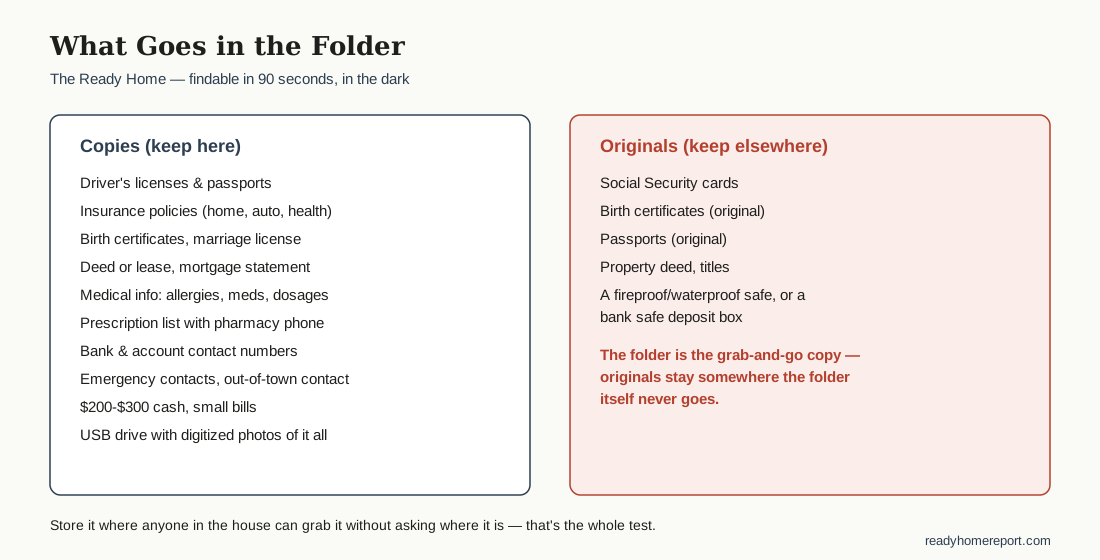
One folder, in one place, that anyone in your house can grab in the dark without asking where it is: copies of IDs and insurance policies, medical info and prescriptions, emergency contacts, deed or lease paperwork, a little cash, and a USB drive with digitized backups of it all. Originals of the truly irreplaceable stuff (Social Security cards, birth certificates, passports) stay somewhere more secure, like a fireproof safe or a bank box, not in the grab-and-go folder itself.
We built ours after Uri, not because of the storm directly but because of what came after: a claims adjuster asking for policy numbers and account details while our power was still out and our phones were nearly dead. We had none of it memorized and none of it findable. That’s the entire reason this folder exists. Not for some dramatic evacuation scene, but for the boring, exhausting logistics that follow almost every real disruption.
What goes in the grab-and-go folder
Ready.gov’s standard emergency kit guidance includes a documents category. Here’s what we actually keep in ours:
- Copies of driver’s licenses and passports
- Insurance policies: home, auto, and health
- Birth certificates and marriage license
- Deed or lease and mortgage statement
- Medical info: allergies, medications, dosages
- Current prescription list
- Bank and account contact numbers
- Emergency contacts, plus one out-of-town contact everyone knows to call
- A couple hundred dollars in small bills
- A USB drive with everything above digitized
What stays somewhere else entirely
Original Social Security cards, original birth certificates, original passports, and property titles belong in a fireproof, waterproof safe at home or a bank safe deposit box. Never in the folder that’s designed to be grabbed and carried. The logic is simple: the folder needs to be accessible to everyone and mobile enough to take with you. Originals need to survive a fire, a flood, or a theft in a location the folder itself never travels to.
Where to actually keep it
On the shelf, in the drawer, wherever your outage kit and flashlights already live. The same place, so there’s one spot in the house that means “readiness stuff,” not three or four scattered ones. Tell every adult and older teenager in the house exactly where it is, out loud, more than once. A folder only your spouse knows about is a folder that doesn’t work if your spouse isn’t home when you need it. This is exactly what we test during the Tuesday Drill: can someone actually find it, in the dark, without asking.
Keeping it current
Review it twice a year (the same schedule as your water rotation and detector batteries) and swap in anything that’s changed: a new insurance policy, an expired ID, a prescription that’s different now. A folder full of two-year-old information is only marginally better than no folder, and it’s an easy thing to let quietly go stale.
FAQ
Should I keep original documents in the emergency folder?
No. Keep copies in the folder for accessibility, and store true originals of Social Security cards, birth certificates, and passports in a fireproof safe or bank box instead.
Is a digital backup enough instead of a physical folder?
Digital backup is a good addition, not a replacement. A dead phone or no internet during an outage is exactly when the physical folder earns its place.
How often should I update the emergency folder?
Twice a year is a reasonable rhythm. Pair it with another seasonal task you already do, like detector battery swaps, so it doesn’t get forgotten.
What kind of container should I use for the folder?
A simple waterproof document bag or accordion folder works fine. The goal is grab-and-go accessibility, not a heavy safe you’d have to carry.
Do I need a folder for each family member or one for the whole household?
One household folder covers most families fine, as long as it includes documents for everyone in the house. Separate folders make sense mainly for blended households or if someone’s documents need to travel separately.
Part of protecting your house during a power outage. It’s also one of the two things we specifically check for during the Tuesday Drill.
This article is for general preparedness education and follows official guidance (FEMA, CDC, CPSC, NWS, USDA) on safety points. In any emergency, instructions from local officials always come first.