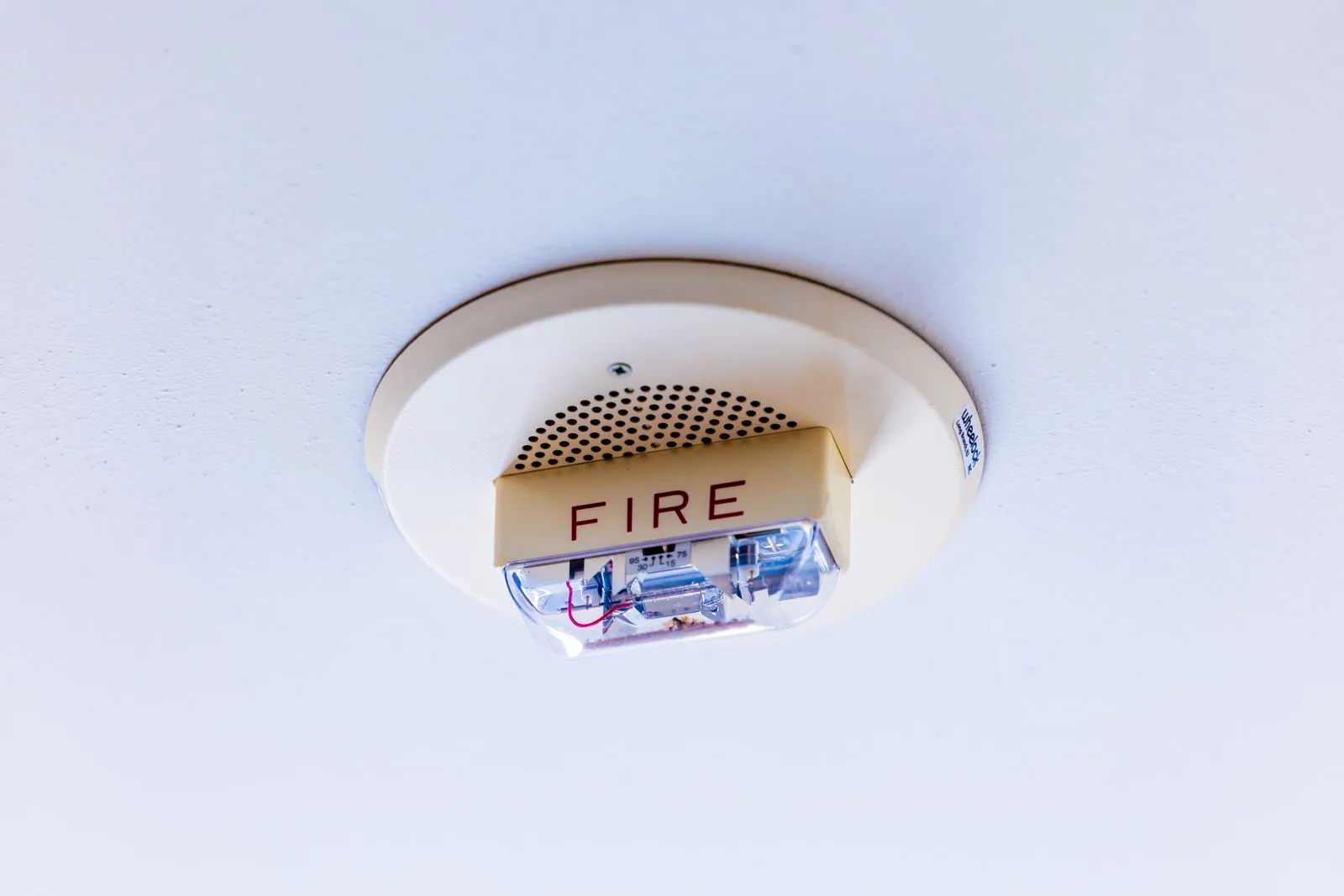
Yes, if the backup battery is actually good. Battery-backed smoke and CO detectors are designed to keep working when the power’s out; that’s the entire purpose of the backup battery, and it switches over automatically the instant the building’s power supply is interrupted. The failure mode isn’t the outage. It’s a backup battery that’s been quietly dying for months and nobody checked.
This article is for general information and isn’t a substitute for professional guidance. If you suspect CO exposure, call 911.
How the backup actually works
Hardwired detectors draw from your home’s electrical system in normal operation, with a backup battery (usually a 9-volt) sitting in reserve. The moment power drops, the detector switches to that battery with no gap in protection. Battery-only detectors (not hardwired at all) obviously keep working the same way they always did. Power status never touched them in the first place.
One distinction worth knowing when you buy: interlinked detectors talk to each other, so if one unit in the basement senses smoke or CO, every unit in the house sounds. Meaningfully faster warning in a large home than a standalone unit going off two floors away. NFPA guidance calls for at least one smoke detector on every level of the home and inside or near every sleeping area; CO detectors follow the same near-bedroom placement logic.
Safety Note: this is the detector that matters most during an outage
Outages are exactly when people improvise heat and light with generators, camp stoves, and charcoal grills run indoors or in the garage. Portable generators are the leading cause of engine-related CO deaths in the US, per CPSC. A working CO detector with a good backup battery is one of the most effective ways to catch this before it becomes dangerous. If yours chirps a low-battery warning, replace it immediately, not tomorrow.
Why an outage raises the actual risk
This is the part that makes detector maintenance more than a chore: outages are exactly when people reach for generators, camp stoves, charcoal grills, and kerosene heaters, and exactly when some of those get run somewhere they shouldn’t, out of cold or desperation. CO poisoning spikes during and right after storms for that reason. A detector that’s silently running dead is the worst possible moment for it to fail.
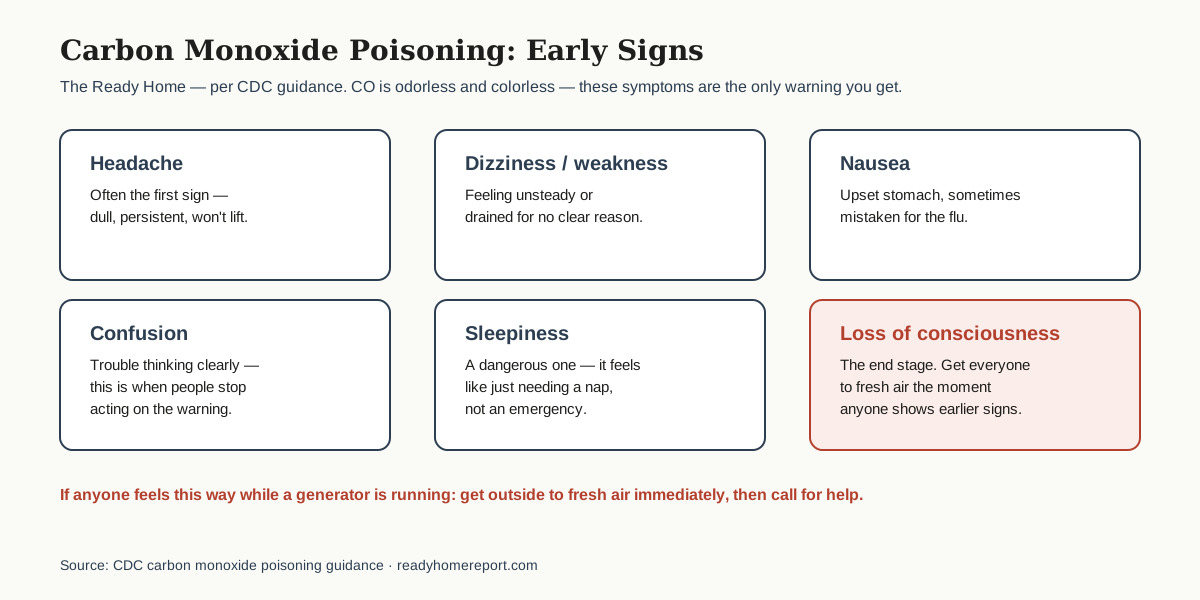
Early symptoms (headache, dizziness, confusion, drowsiness) can be mistaken for a cold or exhaustion from a stressful outage. If anyone in the house shows these while a generator, grill, or camp stove has been running anywhere near the home, get outside into fresh air immediately and call 911 if symptoms don’t clear right away. Don’t go back inside until the area has been ventilated and it’s confirmed safe. CO doesn’t clear just because the source has been shut off. Full generator placement rules are in the generator safety guide, and the same 20-foot rule applies to grills and camp stoves used for cooking without power.
The maintenance schedule that actually prevents this
Test the button monthly. It confirms the alarm sounds, nothing more. Replace the 9V or AA backup battery every six months; tie it to something you already remember, like the clock change, so it’s not a separate thing to forget. Replace the whole unit on the timeline printed on the back: smoke detectors at 10 years, CO detectors typically 5-10 years. The sensor itself degrades over time even if the alarm still beeps on test.
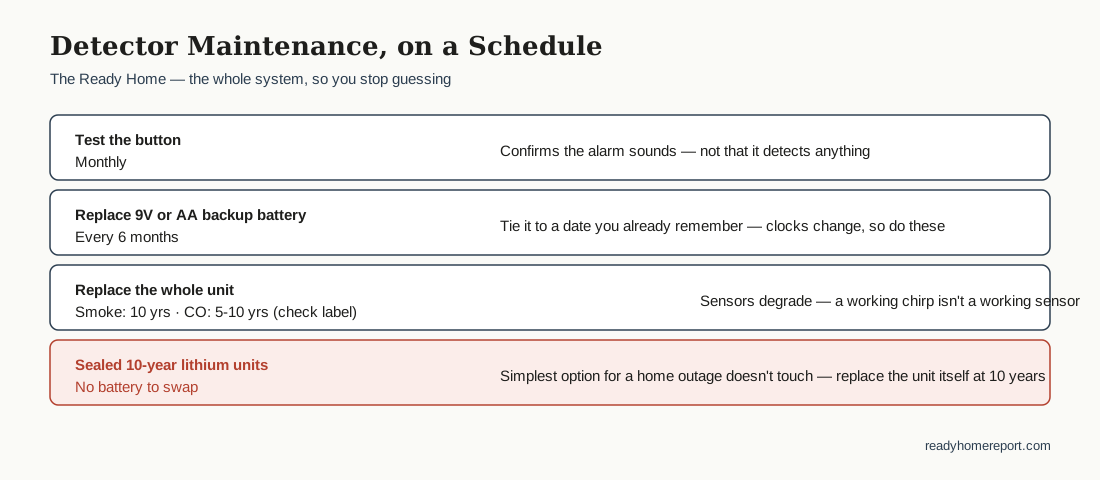
If you’d rather not think about battery swaps at all, sealed 10-year lithium units exist for both smoke and CO detection. No battery to replace, just the whole unit at the 10-year mark. It’s a slightly higher upfront cost that removes an entire category of “did we actually do this” from the list. This is the same maintenance discipline as the rest of the readiness system on this site: see it built into the Tuesday Drill.
FAQ
How often should I replace smoke detector batteries?
Every six months for standard 9V or AA backup batteries, regardless of whether the low-battery chirp has sounded yet.
How long do CO detectors last?
Typically 5-10 years depending on the model. Check the manufacture date printed on the unit, since the sensor degrades even with fresh batteries.
Can a power outage itself trigger a false smoke alarm?
Yes, voltage fluctuations as power drops or is restored can occasionally trigger a brief false alarm. It’s not something to ignore reflexively, but it’s a known, common cause.
What’s the difference between interlinked and standalone detectors?
Interlinked units all sound together when one detects smoke or CO, giving faster warning in a larger home. Standalone units only sound where the danger was detected.
Where should smoke and CO detectors be placed in a house?
NFPA guidance calls for at least one on every level of the home and near every sleeping area, since that’s when people are least likely to notice a slow-building problem on their own.
Part of protecting your house during a power outage. Directly related: is it safe to run a generator in the garage.
This article is for general preparedness education and follows official guidance (FEMA, CDC, CPSC, NWS, USDA) on safety points. In any emergency, instructions from local officials always come first.